
Introduction
Primary cementing depends on slurry design, well preparation, placement practice and consistent control of pump rate and pressure. A cementing truck is therefore one part of the well-integrity system: it must deliver the planned program repeatably, while the final procedure remains subject to the operator, cementing contractor and well conditions.
A modern cementing truck — also referred to as a mobile cementing unit — has become the backbone of efficient, reliable, and safe well cementing. Unlike legacy fixed systems, today’s truck-mounted oilfield cementing equipment delivers the precision, mobility, and automation required to ensure wellbore integrity from surface casing to production liner.
This article explores why cementing remains one of the most consequential steps in well completion, how modern mobile cementing units overcome the limitations of traditional methods, and what operators and procurement managers should look for when selecting a cementing truck manufacturer.
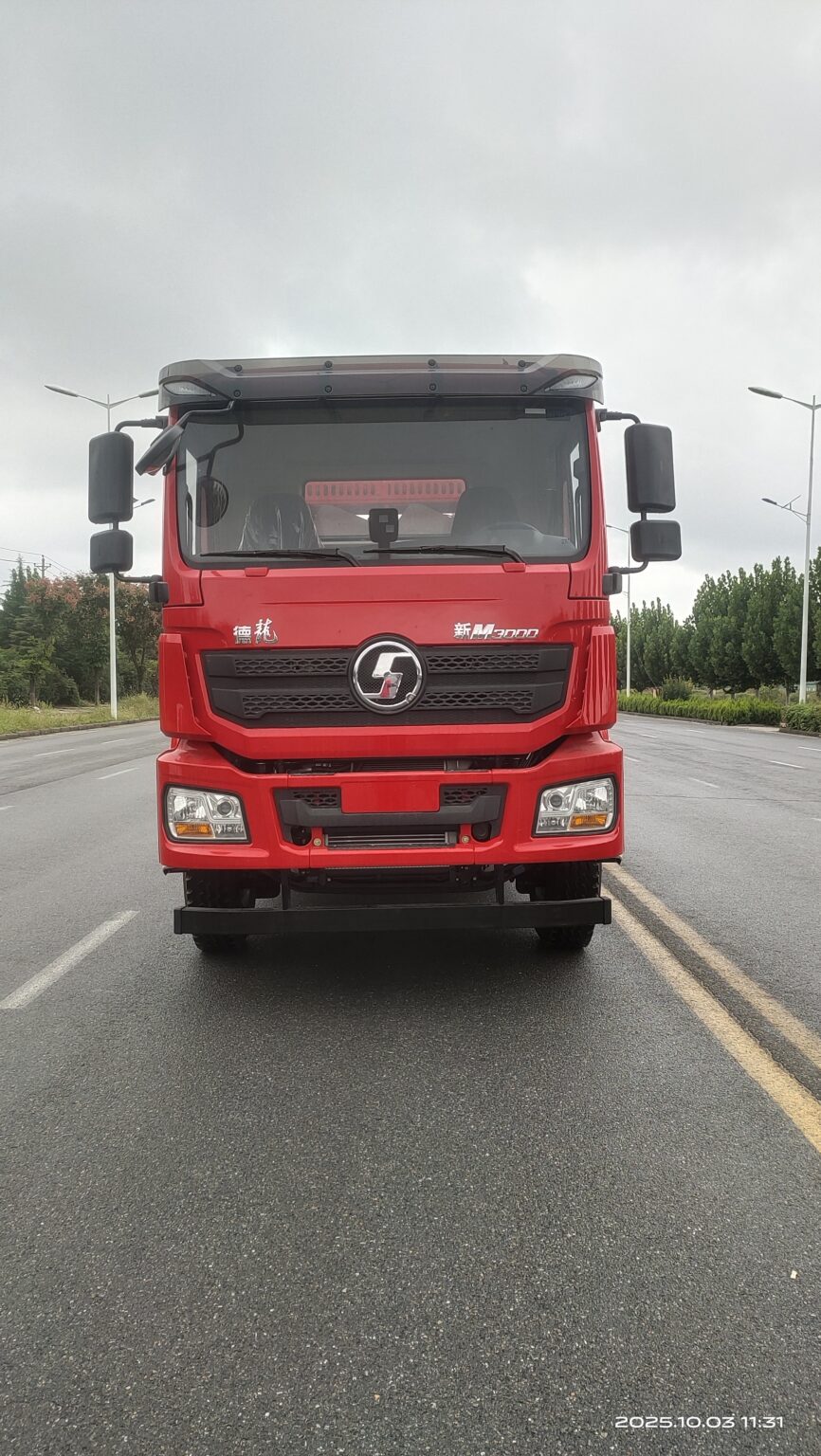 Front view of a Vance Petro cementing truck, engineered for reliable oilfield cementing operations across diverse terrain and climate conditions.
Why Well Cementing Is Critical for Wellbore Integrity and Zonal Isolation
Well cementing serves two fundamental purposes that underpin every subsequent phase of a well’s productive life:
- Structural Support — Cement bonds the casing string to the formation, providing mechanical support that prevents casing buckling, collapse, and movement under thermal and pressure cycling.
- Zonal Isolation — A continuous, channel-free cement sheath prevents fluid migration between permeable zones, isolating production intervals from water-bearing formations and gas caps.
When either of these functions is compromised, the consequences cascade:
- Sustained casing pressure (SCP) — Uncontrolled annular pressure buildup that may require costly remedial intervention or well shut-in.
- Cross-flow contamination — Hydrocarbon or formation water migration into unintended zones, damaging reservoir productivity and violating environmental regulations.
- Well control incidents — In severe cases, cement failure enables underground blowouts or surface gas leaks, posing immediate safety hazards to field personnel.
- Regulatory non-compliance — Many jurisdictions now mandate cement evaluation logs (CBL/VDL) to verify zonal isolation before any well is placed on production.
Primary cementing is one element of the well-barrier plan. The required practices, tests and acceptance criteria must be selected by the responsible operator and cementing contractor for the well design and governing jurisdiction.
This is precisely why the equipment performing the cement job — the cementing truck — must deliver absolute precision in mixing density, pump rate control, and pressure management.
Challenges of Traditional Cementing Methods vs Modern Mobile Cementing Trucks
For decades, many operators — particularly in remote or developing oilfield regions — relied on skid-mounted cementing packages or outdated fixed pumping installations. While functional, these systems present significant operational challenges:
Limitations of Traditional Cementing Systems
- Limited mobility — Skid-mounted units require cranes, flatbeds, and extended rig-up times, delaying cementing schedules by hours or even days.
- Inconsistent mixing — Older recirculating mixers struggle to maintain uniform slurry density, leading to cement channeling and poor zonal isolation.
- Manual control dependency — Operators must manually adjust pump rate and pressure, increasing human error risk during critical displacement stages.
- High maintenance downtime — Aging fluid-end components and outdated hydraulic systems lead to frequent breakdowns, especially in high-temperature or abrasive environments.
- Poor data recording — Without integrated data acquisition, post-job analysis is limited, making it difficult to diagnose problems or optimize future jobs.
Advantages of Modern Mobile Cementing Trucks
A purpose-built mobile cementing unit addresses every one of these limitations:
- Rapid deployment — The self-contained truck chassis eliminates the need for cranes and auxiliary transport; the unit drives directly to the wellsite and can begin operations within minutes of arrival.
- Precision mixing — Advanced jet mixing and recirculating systems maintain slurry density within ±0.1 ppg of design, ensuring consistent cement properties from lead to tail slurry.
- Automated pump control — Programmable logic controllers (PLCs) manage pump rate ramp-up, maximum treating pressure limits, and shutdown protocols automatically.
- Integrated data acquisition — Real-time monitoring and recording of pressure, rate, density, volume, and cumulative displacement allow precise job evaluation and regulatory compliance.
- Multi-well efficiency — A single cementing truck can service multiple wells across a field in the same day, dramatically reducing equipment mobilization costs.
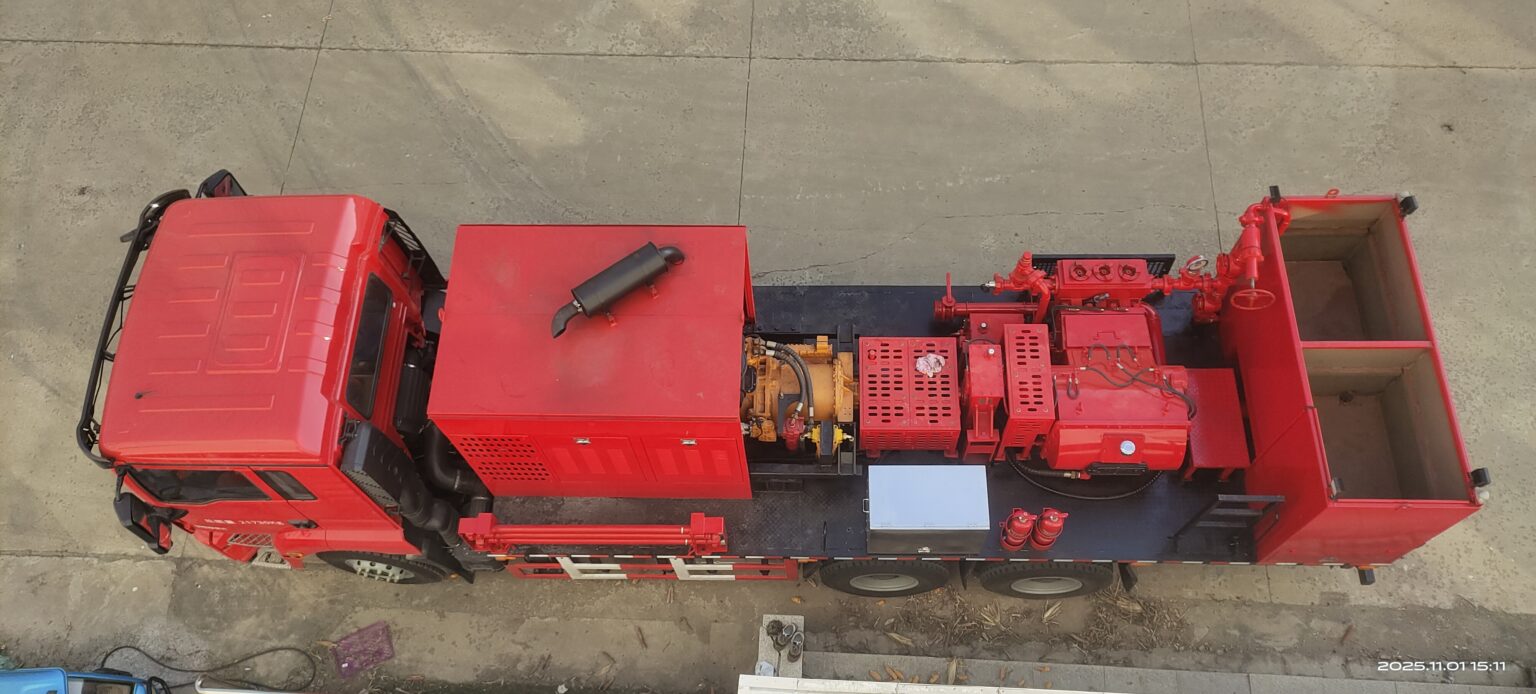 Top-down view of the mobile cementing unit, showing the organized layout of pumping systems, mixing equipment, and control stations for maximum operational efficiency.
Key Components and Features of a High-Performance Cementing Truck
Selecting the right oilfield cementing equipment requires a thorough understanding of the critical subsystems that define performance, reliability, and safety. A high-performance cementing truck typically integrates the following key components on a single heavy-duty truck chassis:
1. High-Pressure Triplex Plunger Pump
The heart of any cementing unit is the positive displacement pump. Modern cementing trucks employ triplex plunger pumps capable of:
- Maximum working pressures of 70–105 MPa (10,000–15,000 psi)
- Flow rates ranging from 200 to 2,500 L/min depending on plunger size
- Quick-change fluid-end modules for fast plunger and valve seat replacement in the field
The triplex design provides smoother discharge pulsation compared to duplex pumps, which is critical for maintaining consistent downhole displacement rates. For more on how triplex pump technology enhances oilfield operations, see our detailed analysis: How Triplex Plunger Pumps Improve Fracturing Efficiency and Reduce Downtime.
2. Cement Mixing System
A high-quality mixing system includes:
- Jet mixer hopper with adjustable throat for precise dry cement addition rates
- Recirculating mixing tank (typically 3–6 m³ capacity) with mechanical agitators to prevent settling
- Densitometer (radioactive or Coriolis-type) for continuous real-time density measurement
- Averaging system to deliver uniform-density slurry to the triplex pump suction
3. High-Pressure Manifold and Treating Lines
- Swivel joints and high-pressure connections rated to full pump working pressure
- Pressure relief valves and rupture discs for overpressure protection
- Quick-connect hammer unions for fast rig-up to wellhead cementing heads
4. Displacement Tankage
- Calibrated displacement tanks (typically 2–8 m³) for precise volume measurement of displacement fluid
- Level indicators and totalizers for accurate plug bump timing
5. Control and Data Acquisition System
- Operator control cabin with PLC-based controls
- Touchscreen HMI (Human-Machine Interface) displaying real-time job parameters
- Data recording and export capabilities for post-job analysis and client reporting
- Emergency shutdown (ESD) systems for safety-critical situations
6. Power Transmission System
- Heavy-duty diesel engine (typically 300–600 HP) or PTO-driven from the truck chassis engine
- Multi-speed transmission with torque converter for smooth power delivery
- Auxiliary hydraulic system for mixer, agitator, and ancillary functions
7. Truck Chassis
- Commercial or oilfield-rated chassis (6×4 or 6×6 drive configurations)
- Designed for off-road capability in remote field locations
- Cold-weather or desert-climate packages available for extreme operating environments
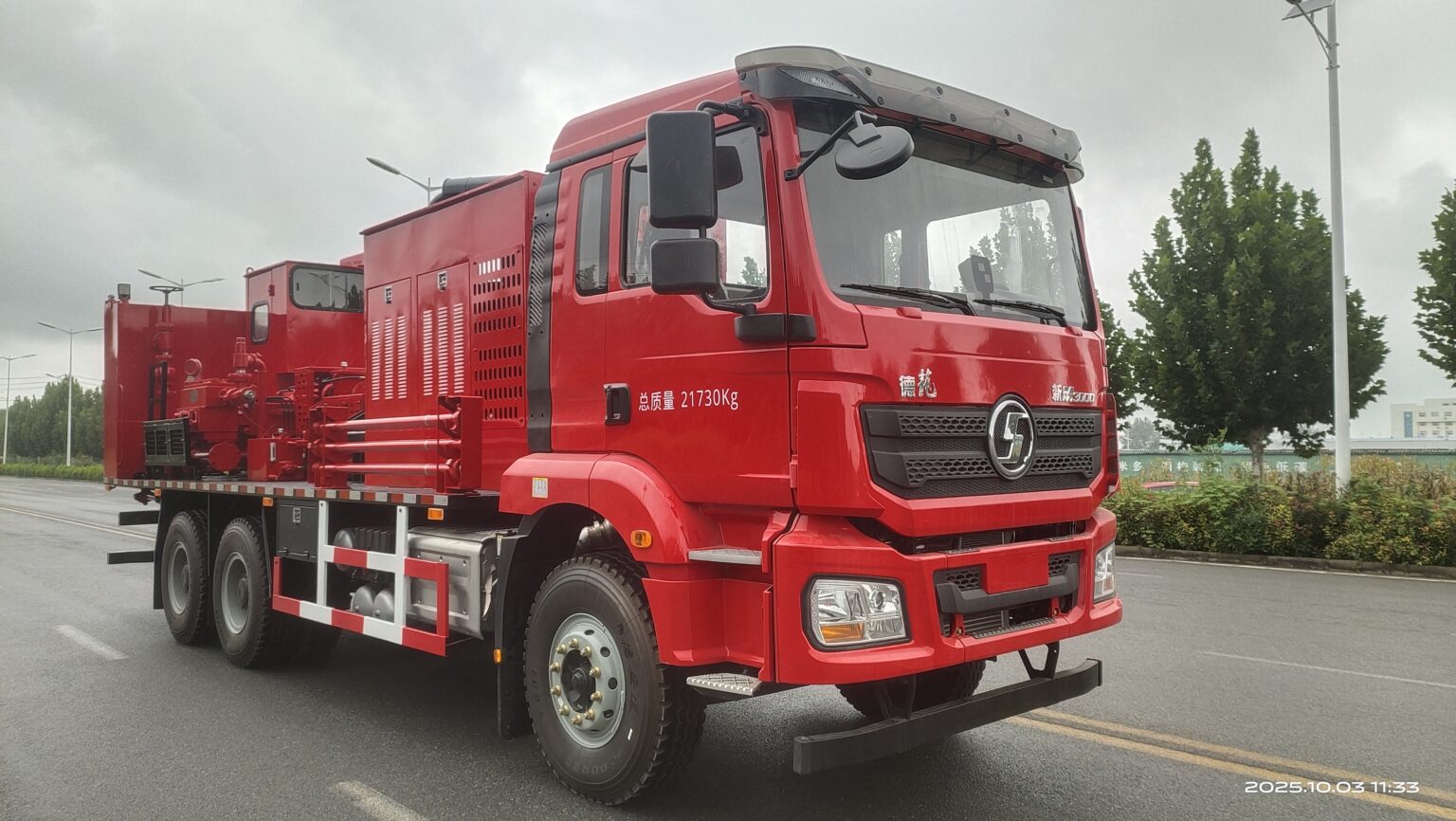 Right-front perspective of the cementing truck highlighting the robust truck chassis, power transmission components, and high-pressure triplex pump system.
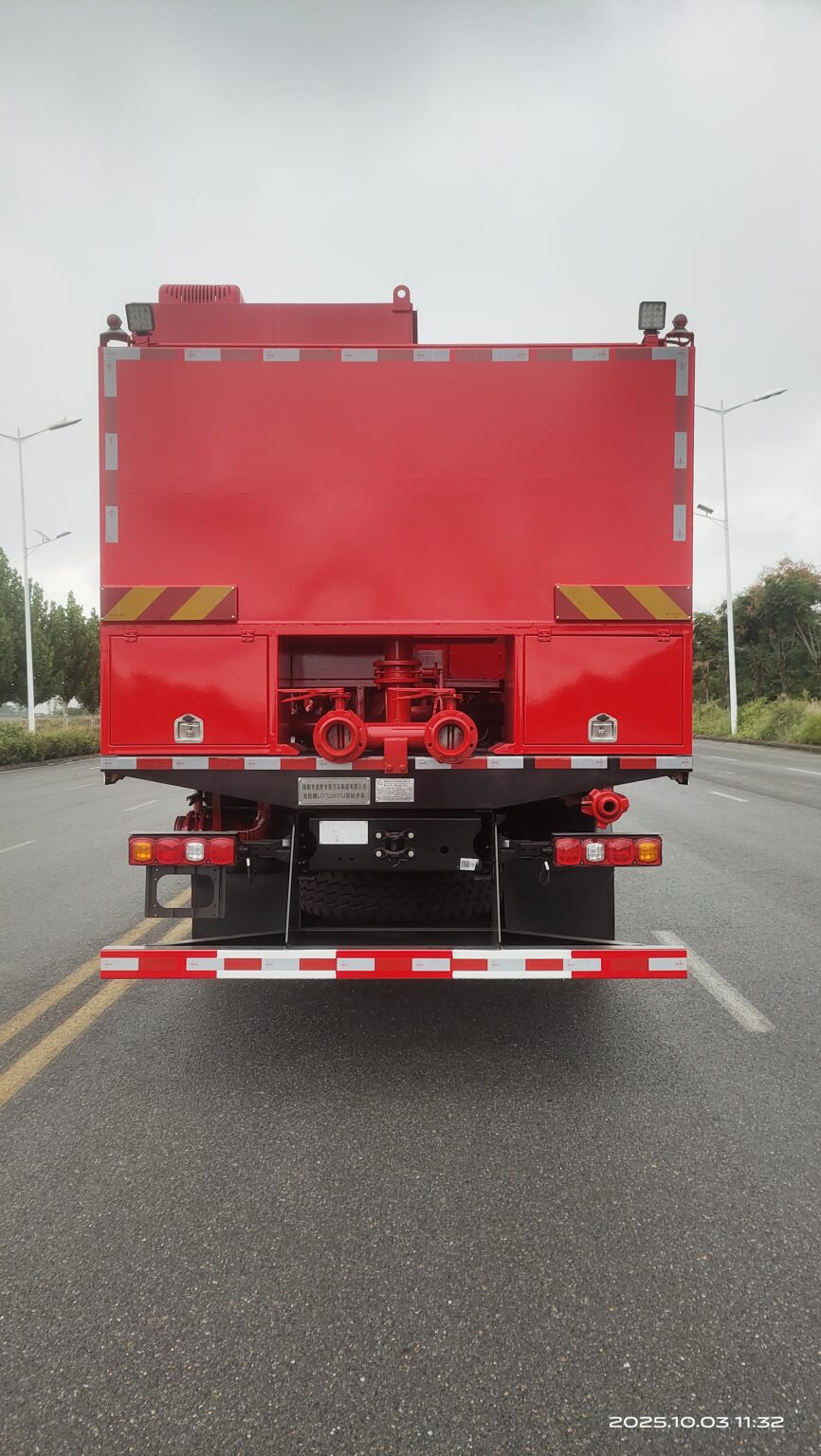 Rear view of the mobile cementing unit displaying the triplex plunger pump, high-pressure manifold connections, and displacement tank arrangement.
How Cementing Trucks Integrate with Other Oilfield Equipment
Cementing operations do not occur in isolation. A successful well completion program requires coordinated deployment of multiple equipment types, and the cementing truck must integrate seamlessly with each:
Pre-Cementing: Wellbore Conditioning
Before cement is pumped, the wellbore must be properly conditioned. This often involves:
- Well flushing and wax removal to ensure clean casing surfaces for cement bonding. Vance Petro’s well flushing and wax removal truck is specifically designed for this preparatory function.
- Circulation of spacer fluids and chemical washes to displace drilling mud ahead of cement.
During Cementing: Pressure and Nitrogen Services
In certain applications — such as lightweight cement systems or foam cementing for lost-circulation zones — nitrogen generation equipment is used in conjunction with the cementing truck to create foamed cement slurries with reduced hydrostatic pressure. Understanding how nitrogen fits into modern well services is essential; explore this topic further in Why Nitrogen Generation Trucks Are Becoming Essential in Modern Oilfield Operations. Vance Petro also manufactures a dedicated nitrogen generation truck designed for seamless field integration.
Post-Cementing: Stimulation and Production
Once cement has been placed and verified, subsequent well completion activities may include:
- Hydraulic fracturing to stimulate production intervals — performed using high-horsepower fracturing trucks that share many common components (triplex pumps, high-pressure iron) with cementing units.
- Thermal operations for heavy oil recovery, where boiler trucks play a critical role in wax control and steam injection.
- Environmental management — Cement returns and wash fluids must be treated and disposed of properly. Operators increasingly deploy dedicated oilfield sewage treatment equipment to meet strict environmental regulations while controlling costs.
By sourcing cementing trucks and complementary equipment from a single integrated manufacturer, operators can standardize spare parts, simplify training, and reduce total cost of ownership across their entire well services fleet.
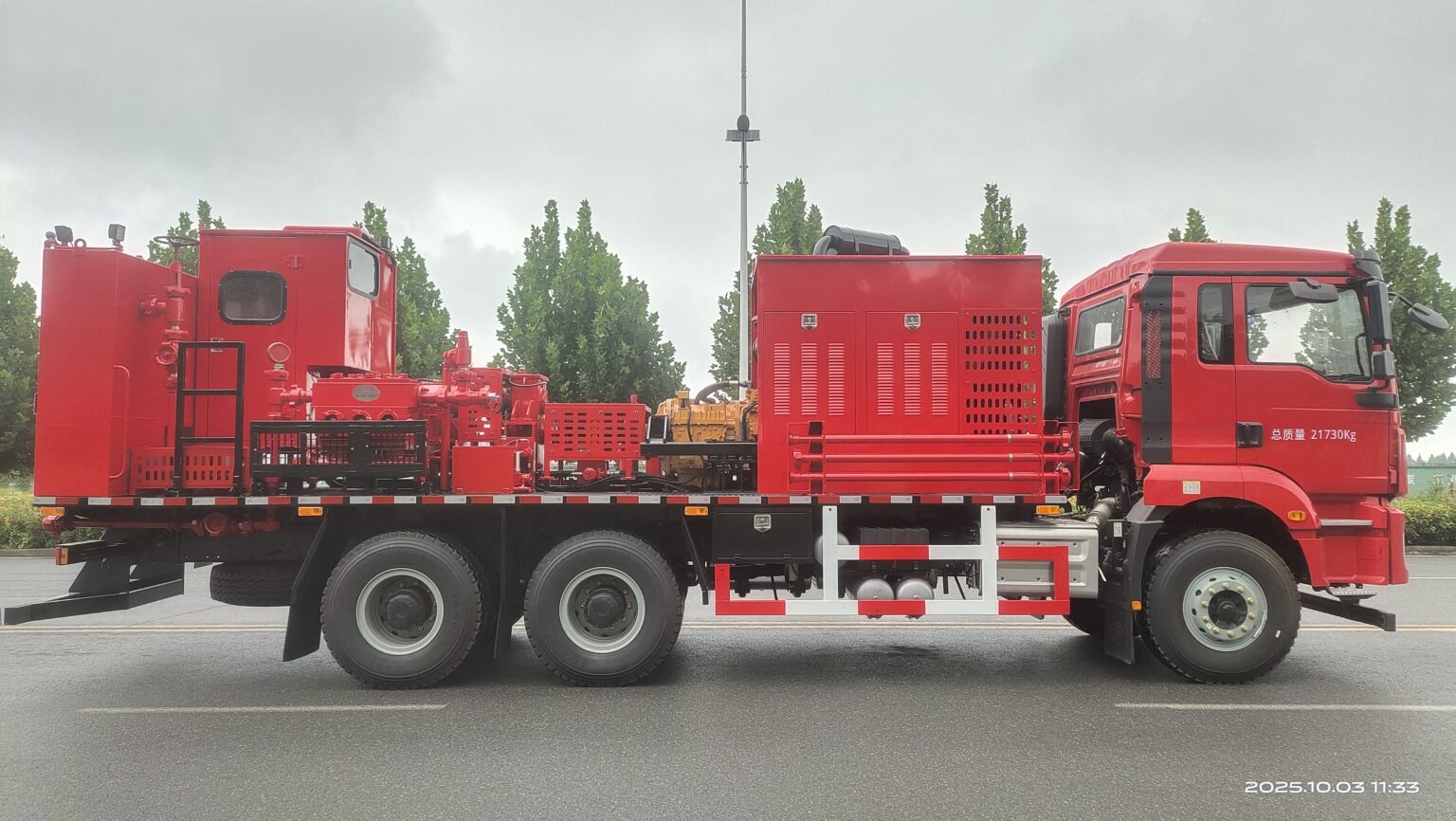 Right-side view of the oilfield cementing equipment, illustrating the operator control station, hydraulic systems, and accessible service points for field maintenance.
Best Practices for Efficient and Safe Cementing Operations
Even the most advanced cementing truck cannot compensate for poor planning or execution. The following planning and execution checks can improve control of a primary cementing job:
Pre-Job Planning
- Conduct a thorough wellbore analysis — Review caliper logs, formation pressure profiles, and mud properties to design appropriate cement volumes, densities, and placement schedules.
- Perform cement slurry laboratory testing — Verify thickening time, compressive strength development, fluid loss, and free water at bottomhole conditions before mobilizing to the well.
- Develop a detailed pumping schedule — Define rates, pressures, volumes, and plug drop timing for every stage of the job.
Equipment Preparation
- Pressure test all high-pressure connections to at least 1.5× maximum anticipated treating pressure before connecting to the wellhead.
- Calibrate densitometers and flow meters before every job.
- Verify displacement tank volumes to ensure accurate plug bump timing.
- Inspect fluid-end components — Replace plungers, packing, and valve seats that show any signs of wear.
During Pumping
- Maintain consistent pump rates — Avoid sudden rate changes that can create pressure surges and induce formation fracturing or lost circulation.
- Monitor density continuously — Any deviation greater than ±0.2 ppg from design should trigger immediate investigation.
- Record all data — Pressure, rate, density, and volume should be logged at minimum 1-second intervals for post-job analysis.
- Communicate clearly with the rig floor team, especially during plug drops and final displacement.
Post-Job Evaluation
- Compare actual vs. planned job parameters — Analyze any deviations in volume, pressure, or density.
- Run cement evaluation logs (CBL/VDL or ultrasonic) after appropriate WOC (wait-on-cement) time.
- Document lessons learned for continuous improvement.
Safety Essentials
- Ensure all personnel are clear of high-pressure zones during pumping.
- Maintain emergency shutdown capability at all times.
- Conduct pre-job safety meetings (toolbox talks) covering specific hazards of the cementing operation.
- Follow LOTO (lockout/tagout) procedures during rig-up and rig-down.
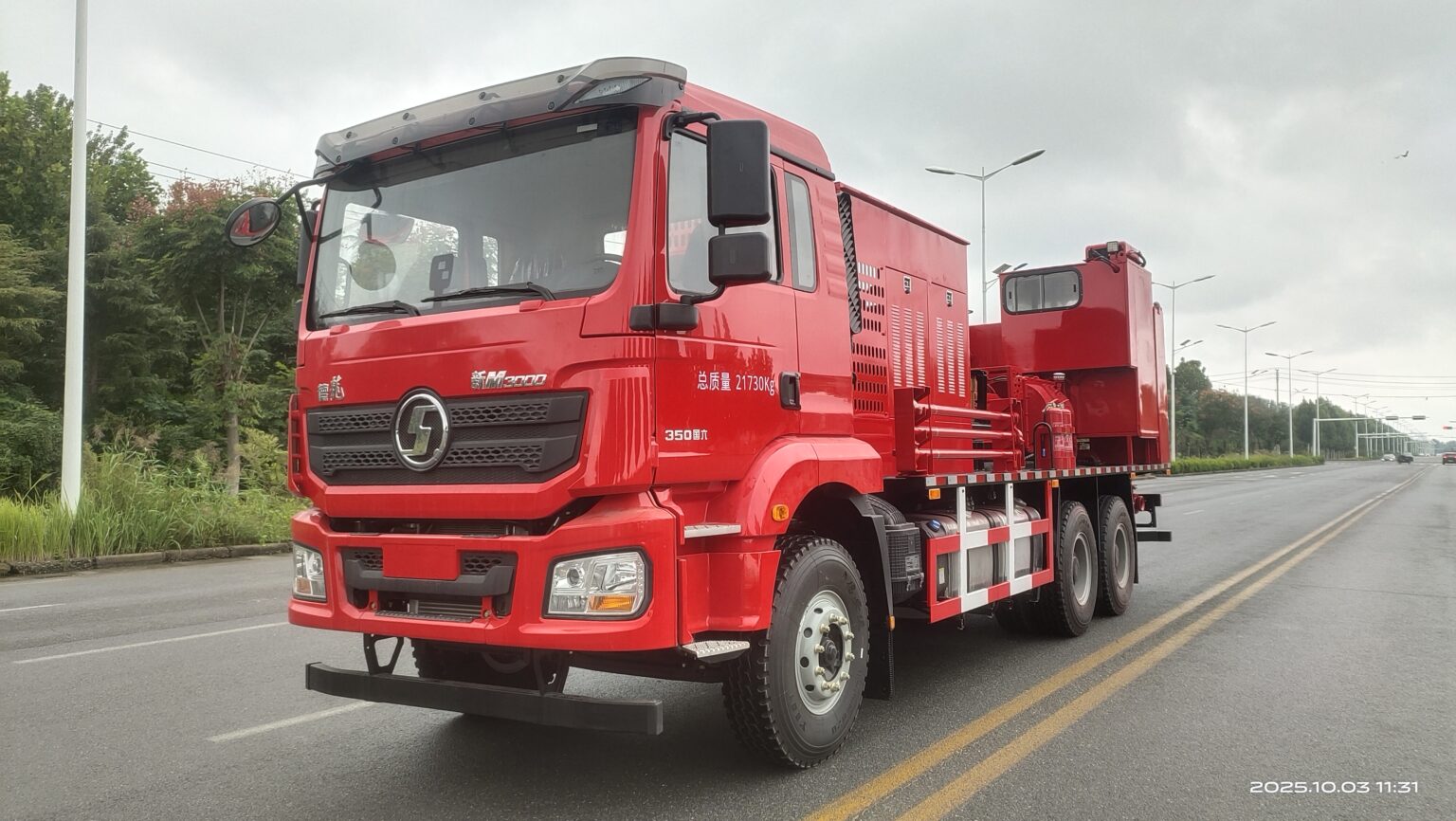 Left-front angle of the Vance Petro cementing truck, showcasing the unit’s compact, road-ready design optimized for rapid mobilization to remote wellsites.
Why Choose a Professional Cementing Truck Manufacturer from China
Country of manufacture is less important than documented project fit. Buyers should compare the pressure and mixing envelope, component traceability, chassis support, service access, inspection plan, spare-parts scope and destination documentation offered for the actual cementing program.
Engineering and Quality Standards
- Project-specific compliance — Identify the pump, pressure-control, wellhead-interface and cement-testing requirements that apply to the actual project, then record them in the technical specification and inspection plan.
- If independent inspection is required, agree the inspection body, witness points and document scope in the contract. Availability and acceptance must be confirmed for the project.
- Finite Element Analysis (FEA) and computational fluid dynamics (CFD) used in pump and mixer design.
Customization Capability
- Chassis flexibility — Units can be built on Mercedes-Benz, MAN, Sinotruk, Shacman, or customer-specified chassis platforms.
- Climate adaptation — Arctic-rated packages (−40°C) for CIS operators; high-ambient packages (+55°C) for Middle East and African deployments.
- Voltage and control system localization — Electrical systems can be configured to local standards.
After-Sales Support
- Field commissioning and operator training — Manufacturer engineers travel to the wellsite for startup and training.
- Spare parts inventory — Maintained at regional warehouses or shipped within 48-hour lead times.
- Remote technical support — 24/7 WhatsApp and video call support for troubleshooting.
Cost-Effectiveness
Chinese-manufactured cementing trucks typically offer:
- Compare documented equipment scope, component availability, acceptance testing and lifecycle support on equivalent quotations; country of manufacture alone does not establish price advantage or quality.
- Lower total cost of ownership over a 10-year service life
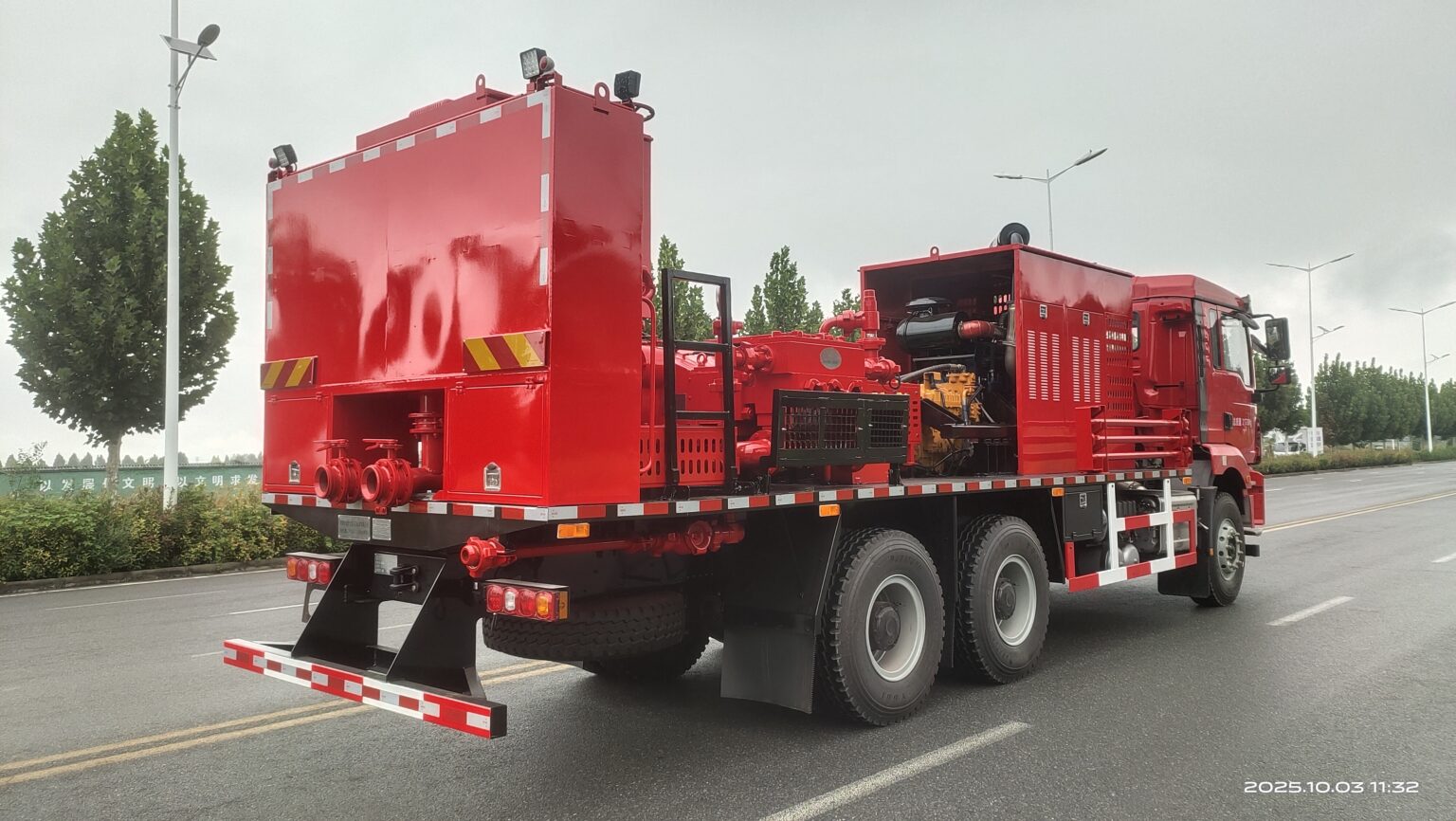 Rear-right perspective of the mobile cementing unit, providing a detailed view of the high-pressure pump system, manifold connections, and safety relief devices.
Conclusion
Wellbore integrity begins with cementing — and cementing success begins with the right equipment. As oilfield operations become more demanding, more remote, and more heavily regulated, the cementing truck has evolved from a simple pump-on-a-truck into a sophisticated, automated, mobile cementing system that directly determines whether a well will produce safely and profitably for decades.
Whether you are a well services company expanding operations in West Africa, a national oil company in the CIS region modernizing your fleet, or an oilfield services contractor in the Middle East seeking reliable, cost-effective oilfield cementing equipment, choosing the right mobile cementing unit — and the right manufacturer — is one of the most consequential equipment decisions you will make.
Henan Vance Petroleum Machinery Co., Ltd. supplies cementing and related oilfield service equipment. Buyers can request a project-specific configuration, component list, inspection plan, documentation scope and spare-parts proposal for technical review before an order.
Ready to Upgrade Your Cementing Fleet?
Contact our engineering team today for:
- ✅ Customized cementing truck specifications tailored to your wellbore conditions and field requirements
- ✅ Competitive factory-direct pricing with flexible payment terms
- ✅ Technical consultations on equipment selection, integration, and fleet optimization
Get in touch now:
- 📞 Tel: +86 189 3767 6920
- 💬 WhatsApp: +86 189 3767 6920
- 📧 Email: info@vancepetro.com
- 🏭 Address: 200m East to South at the intersection of 106 National Road and Jintian Road, Mengke Township, Hualong District, Puyang City, Henan Province, China
Your wellbore integrity is only as good as the equipment behind it. Make every cement job count — with Vance Petro.
Continue your equipment research
Compare the equipment pages and technical notes most closely connected to this topic.