
Buyers comparing oilfield cementing equipment for sale should begin with the well program, not a truck photograph or a single pressure figure. The practical purchase is a complete cementing package: pumping and mixing equipment, power transmission, measurement and controls, chassis integration, service access, project documentation, spare parts and an agreed inspection plan. If those boundaries are vague, two quotations that look similar can represent very different delivered scopes.
This guide explains what to define before requesting a quotation for a new mobile cementing unit. It is intended for oilfield service companies, drilling contractors and procurement teams evaluating equipment for primary cementing, remedial work or other project-defined pumping duties.
Define the cementing job before comparing equipment for sale
A useful specification starts with the planned operation. State whether the unit will support primary cementing, squeeze cementing, plug work or a mixed service program. Provide the expected slurry systems, batch volumes, required density range, maximum planned treating pressure, operating rate, duty duration and the frequency of jobs. These inputs allow a supplier to discuss an appropriate oilfield cementing truck and mixing package instead of selecting components from an incomplete product name.
The maximum value is not the only design point. A unit may need to control low rates steadily during part of a job and deliver a higher rate during another stage. The pressure and flow requirement should therefore be expressed as an operating envelope, with normal and maximum cases clearly separated. The final rating must be confirmed for the complete system, including the pump, power train, high-pressure manifold, valves, piping, controls and relief arrangements.
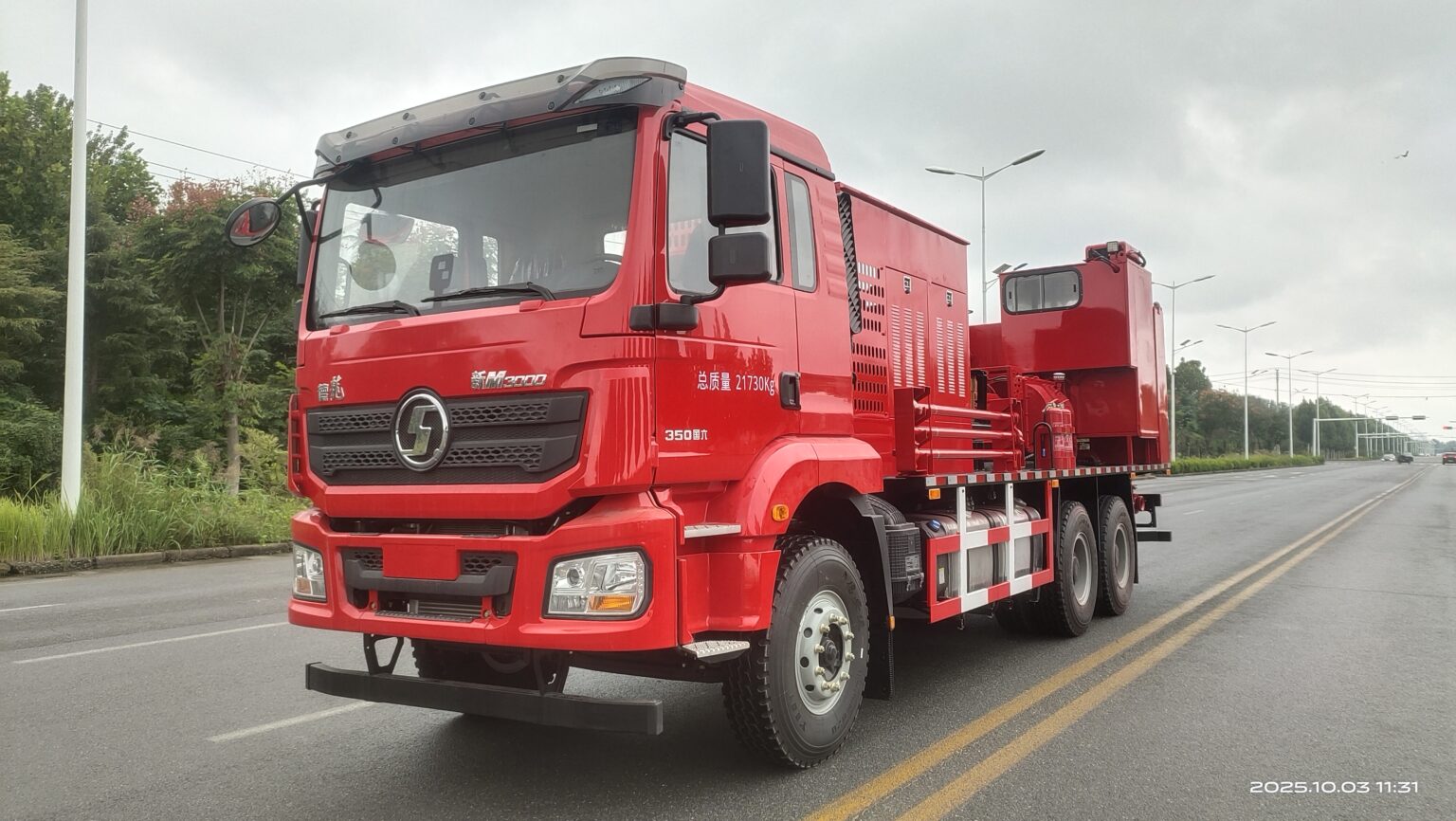
Compare the full cementing package, not one headline number
Supplier quotations should expose the main system boundaries. Ask for a component list or preliminary data sheet that identifies the prime mover, transmission, triplex plunger pump, mixing system, tanks, manifolds, controls and chassis. When a key item is described only as “standard,” request the proposed make, model, rating or agreed performance basis before technical evaluation.
| Decision area | Information the buyer should provide | What to compare in quotations |
|---|---|---|
| Pumping duty | Normal and maximum pressure, rate, duration and fluid data | Pump and power-train envelope, controls, pressure-containing scope and test basis |
| Mixing and slurry handling | Slurry systems, density range, batch volume and operating sequence | Mixer type, recirculation, tanks, measurement method and cleaning access |
| Vehicle integration | Road conditions, axle or dimensional limits, climate and preferred chassis support | Weight distribution, deck layout, cooling, service access and local chassis availability |
| Documentation | Destination rules, operator requirements, inspection points and language | Drawings, data sheets, manuals, certificates, test records and document schedule |
| Lifecycle support | Local maintenance capability, operating hours and stocking strategy | Commissioning scope, recommended spares, special tools, training and response route |
Pumping and power transmission
The high-pressure pump must be considered together with its driver and transmission. Ask how usable power, speed range, cooling and duty cycle are matched. Clarify whether published pressure and flow values are simultaneous operating points or separate maxima. The same discipline applies when comparing a cementing package with a fracturing pressure-pumping unit: the application, fluid system and duty cycle determine whether a component arrangement is appropriate.
Mixing, density control and operator visibility
A cementing unit must prepare and handle slurry consistently within the agreed process. Review the proposed mixer, recirculation path, tank arrangement, density measurement, additive interfaces and cleaning provisions. Ask where the operator can see pressure, rate, density and system status, how critical signals are recorded, and which alarms or shutdown functions are included. These questions are more useful than assuming that every “automatic” system has the same capabilities.
Chassis, layout and destination conditions
Road regulations, bridge limits, turning space, terrain, ambient temperature, altitude and service infrastructure affect the vehicle package. Define the destination country and operating area early. The supplier can then review chassis availability, axle loading, deck arrangement, radiator capacity, winterization or high-temperature provisions, lighting and transport dimensions against the intended market. Final compliance and registration responsibilities should be written into the commercial scope rather than assumed.
What changes the delivered cost of an oilfield cementing unit?
There is no responsible universal price for a cementing truck because the technical boundary changes the cost. Pumping power and pressure-containing components are major factors, but they are not the whole calculation. Mixer configuration, instrumentation, data acquisition, chassis brand, emissions configuration, cooling, cold-weather package, documentation, third-party inspection, spare parts, packing, inland transport and international freight can all change the delivered total.
For a fair commercial comparison, normalize each offer into the same categories:
- Base equipment: the exact vehicle, pump, mixer, tanks, manifolds, controls and accessories included.
- Project engineering: drawings, technical review, destination adaptation and agreed documentation.
- Verification: factory tests, witnessed inspections, records and any third-party scope.
- Operating readiness: commissioning, training, initial consumables, special tools and recommended spares.
- Delivery boundary: packing, transport, insurance, port charges, import obligations and final-site handling.
A low initial number can become the expensive option if essential valves, instrumentation, documentation or spares appear later as exclusions. Conversely, a larger package should not be accepted without confirming that each addition supports the planned work. Compare evaluated delivered scope, not only the first line of the quotation.
New, used or rebuilt cementing equipment?
Used equipment may shorten acquisition time or reduce initial capital, but condition and configuration risk require a disciplined inspection. Check operating hours where records are credible, pump fluid-end and power-end condition, engine and transmission history, corrosion, pressure-control components, electrical modifications, control-system support and the availability of drawings and manuals. Confirm whether the chassis can be registered and serviced in the destination market.
For rebuilt equipment, define what “rebuilt” means item by item. A repaint is not a mechanical overhaul. The offer should identify replaced components, measured clearances, pressure tests, function tests and remaining items accepted as-is. New equipment provides a clearer route to application-specific integration, but it still needs an agreed data sheet and acceptance plan. The right choice depends on schedule, technical fit, documentation quality, support capability and total ownership risk.
Documents and tests to request before purchase
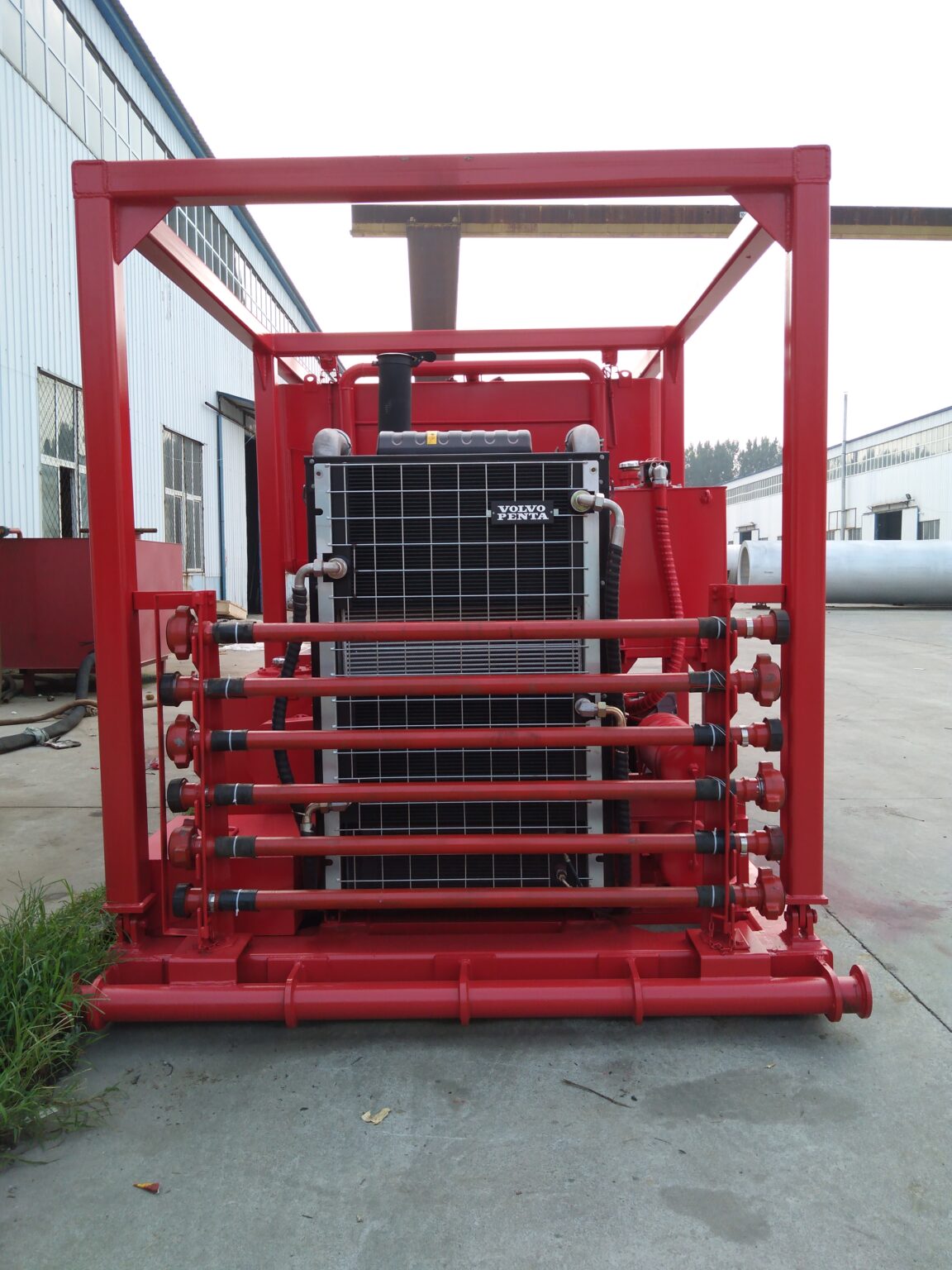
Documentation should be a defined deliverable. Depending on the project, the package may include a general arrangement drawing, equipment data sheets, component list, process or piping diagram, electrical information, operating and maintenance manuals, recommended spare-parts list, packing list and test records. Required language, file format, review cycle and delivery date should be stated in the purchase documents.
The inspection and test plan should identify which checks are performed, the acceptance criteria, who reviews or witnesses them and which records are issued. Typical project discussions can include dimensional and visual inspection, function checks, pressure tests for the agreed system boundary, control and alarm checks, and verification of documentation or nameplate data. The responsible buyer, operator and supplier must agree the actual scope for the intended service and jurisdiction.
For a more detailed preparation list, use the existing cement pump truck buyer layout and service checklist. It helps turn a broad request into reviewable technical questions.
RFQ checklist for oilfield cementing equipment for sale
A supplier can respond more accurately when the request for quotation contains the following information:
- Intended cementing operations and anticipated annual or monthly job frequency.
- Slurry types, density range, batch or tank requirements and additive interfaces.
- Normal and maximum pressure, flow and duty duration, with simultaneous operating points identified.
- Preferred chassis, road and axle restrictions, climate, altitude and destination country.
- Fuel, emissions, electrical, control, data-recording and communication requirements.
- Applicable operator specifications, project standards and document language.
- Inspection, witness, test-record and third-party requirements.
- Commissioning, training, warranty, spare-parts and special-tool expectations.
- Required delivery date, Incoterm or logistics boundary, and receiving location.
Vance Petroleum can review these inputs and prepare a project-specific configuration for technical and commercial discussion. Use the technical inquiry form to send the well-service duty, operating envelope, destination and required documentation. The result should be a traceable specification that lets your team compare the proposed cementing unit on equal terms.
Continue your equipment research
Compare the equipment pages and technical notes most closely connected to this topic.