
A useful cementing unit specification lets suppliers price the same operating task and lets the buyer check that the proposed unit can perform it. It should connect slurry preparation, pumping duty, vehicle limits and acceptance evidence. A maximum pressure printed beside a maximum flow does not establish that both are available together.
Use the worksheet below when requesting a mobile cementing truck. Enter the project values, units and tolerances; mark unresolved items as questions instead of allowing each bidder to assume a different requirement. This is a procurement checklist, not a well-cementing program or operating procedure.
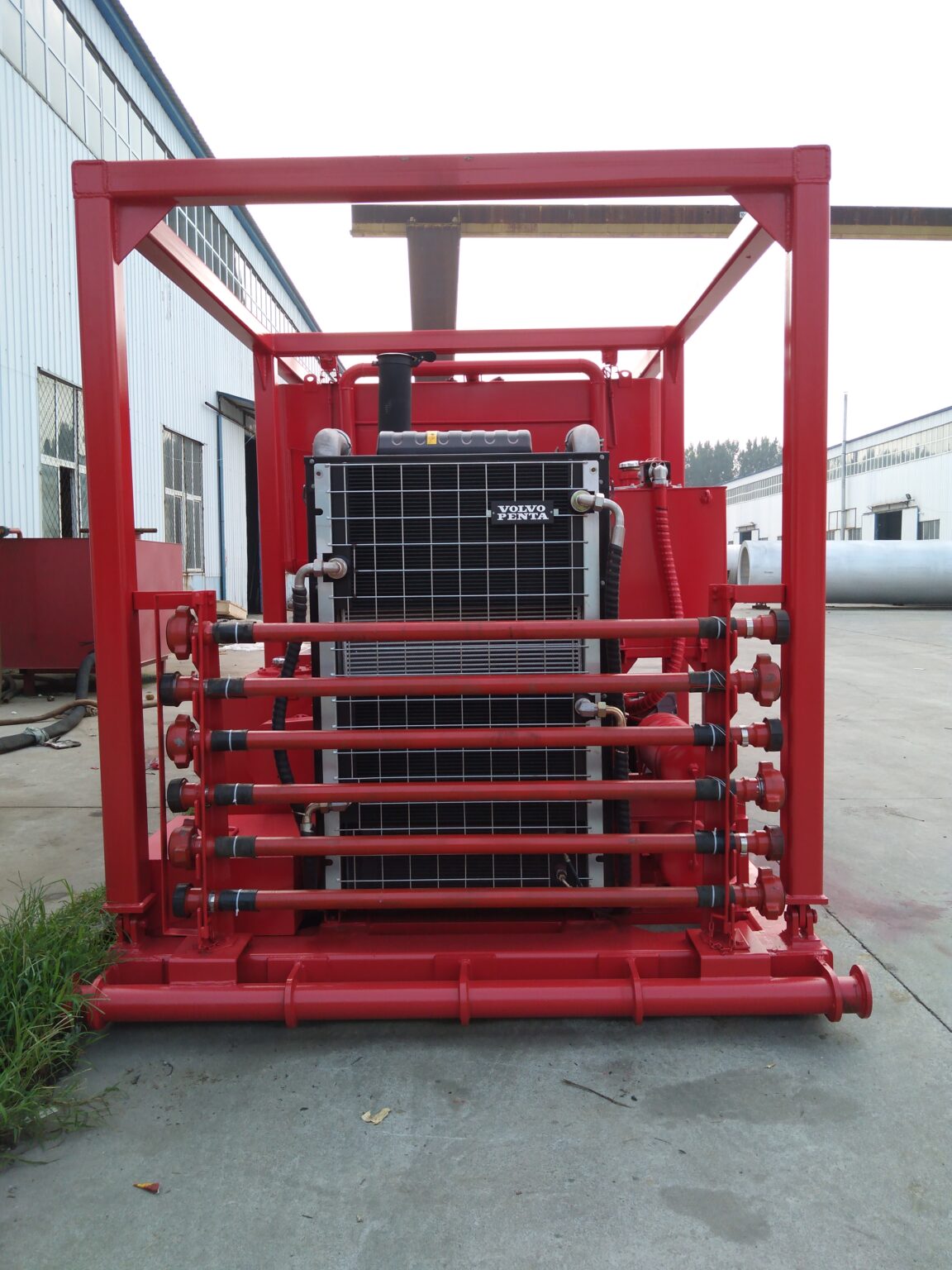
1. Define normal and limiting duties separately
Provide the job types, slurry and displacement volumes, expected operating hours and moves between locations. For every important duty point, state pressure and rate as a pair. Identify whether the stated pressure is at the pump discharge or at another system boundary. Ask the supplier to show the available operating envelope with the proposed engine, transmission and plunger arrangement.
| Worksheet field | Buyer information | Supplier response required |
|---|---|---|
| Normal pumping case | Pressure, rate, fluid and duration | Continuous duty capability and power basis |
| Limiting pumping case | Paired pressure and rate; duration and frequency | Rating, restrictions and any configuration change |
| Slurry preparation | Density range, volume, mixing water and cement supply | Mixing method, control range and feed interfaces |
| Low-rate work | Minimum controllable rate and measurement need | Control resolution and measurement arrangement |
| Site and transport | Climate, altitude, roads and destination | Derating, dimensions, masses and chassis proposal |
2. Make mixing and measurement part of the supply boundary
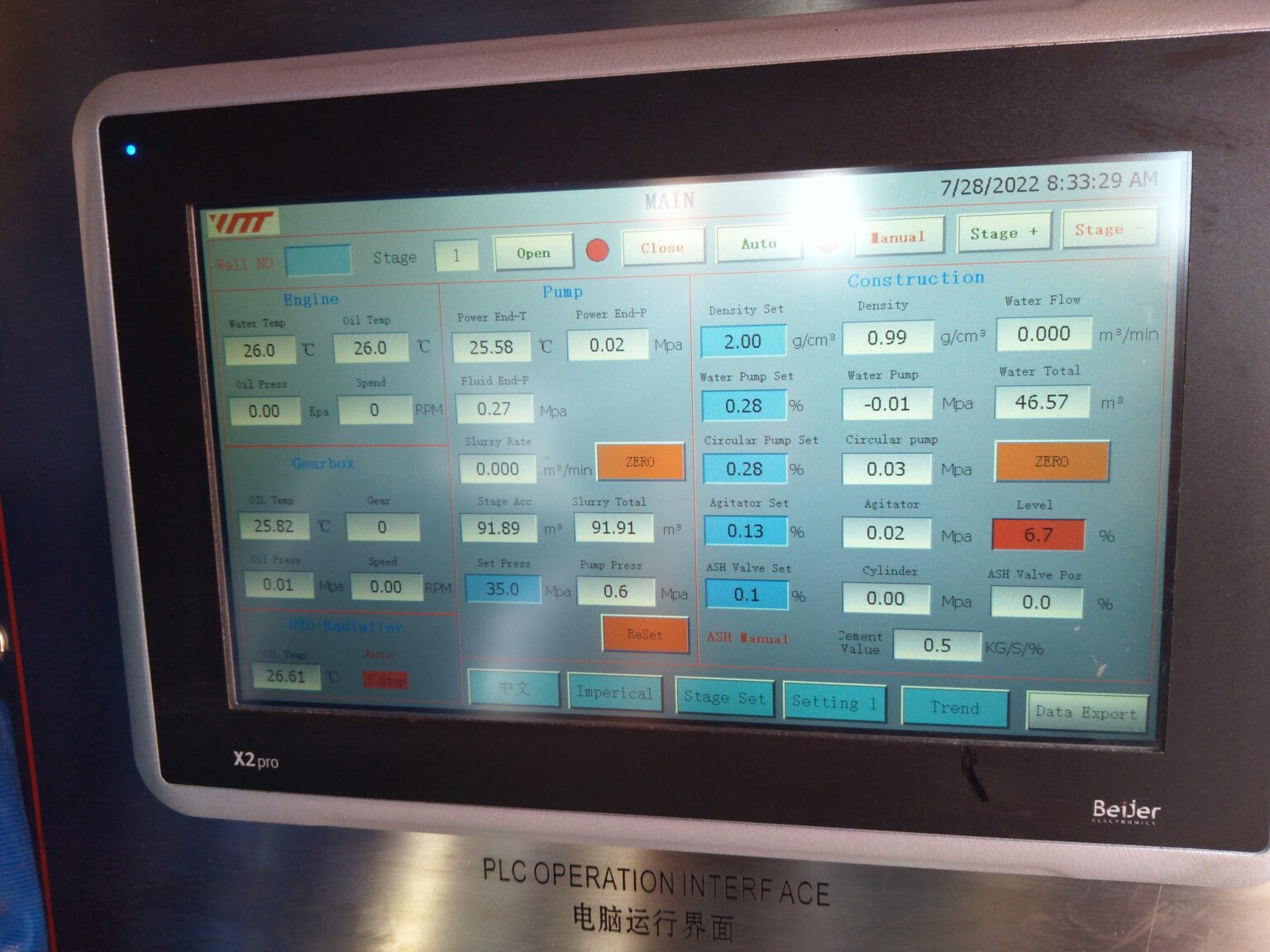
Identify who supplies mixing water, bulk cement, additives and transfer equipment. State whether batch mixing, continuous mixing or both are required. Describe the slurry range rather than assuming that a clean-water pump test demonstrates slurry-mixing performance. Ask how density is measured, how the instrument is checked and which operator controls are included.
Record usable tank capacity separately from geometric capacity. Include the required suction conditions, transfer distances and external tank connections. Where the contractor already owns a cement supply system, exchange interface drawings before accepting a package layout. Otherwise, an apparently complete truck may still require unpriced field equipment.
3. Specify interfaces and maintainability
List suction and discharge connection sizes, pressure classes, hose or iron scope and ownership of external manifolds. Request the pressure-limiting and emergency-stop functions as a documented control philosophy. The appropriate protection settings and operating procedures must be established for the actual installation by qualified personnel.
For the triplex plunger pump, ask for the proposed fluid-end materials, consumable parts list and service access drawing. Identify available lifting facilities and the destination workshop capability. Separate commissioning spares, normal wear parts and recommended longer-term inventory in the commercial offer.
4. Resolve export and chassis requirements before ordering
Give the supplier the destination country and planned registration or off-road use. Confirm steering configuration, emissions requirements, permissible axle loads, gross vehicle mass and local chassis support. Do not assume that a chassis sold domestically can be registered in every export market. Assign responsibility for approvals and supporting documents in the quotation.
Ask for shipping dimensions and weight in the offered transport condition, together with packing, preservation and unloading requirements. Make clear whether commissioning, translation, operator training and travel expenses are included. Delivery terms should identify the named place and the agreed Incoterms edition, not simply say “export price.”
5. Turn the specification into acceptance evidence
Issue one revision-controlled duty sheet to all bidders. Require a line-by-line compliance response with deviations and exclusions. Agree which requirements are checked by drawing review, component certificates, functional testing or witnessed performance testing. Use the cementing unit FAT checklist to define the later verification stage without confusing it with the initial equipment selection.
For an initial proposal, send the completed duty sheet to Vance Petroleum with the destination, required schedule and existing equipment interfaces. A useful quotation should state what is included, what remains subject to confirmation and which operating limits apply.
Continue your equipment research
Compare the equipment pages and technical notes most closely connected to this topic.