
A frac pump trailer and a truck-mounted fracturing unit should be compared at the same pressure, flow and duty cycle before comparing transport layouts. The better choice depends on road access, available tractors, pad space, maintenance arrangements and the actual transported weight. A trailer is not automatically more productive, and a truck is not automatically easier to deploy on every route.
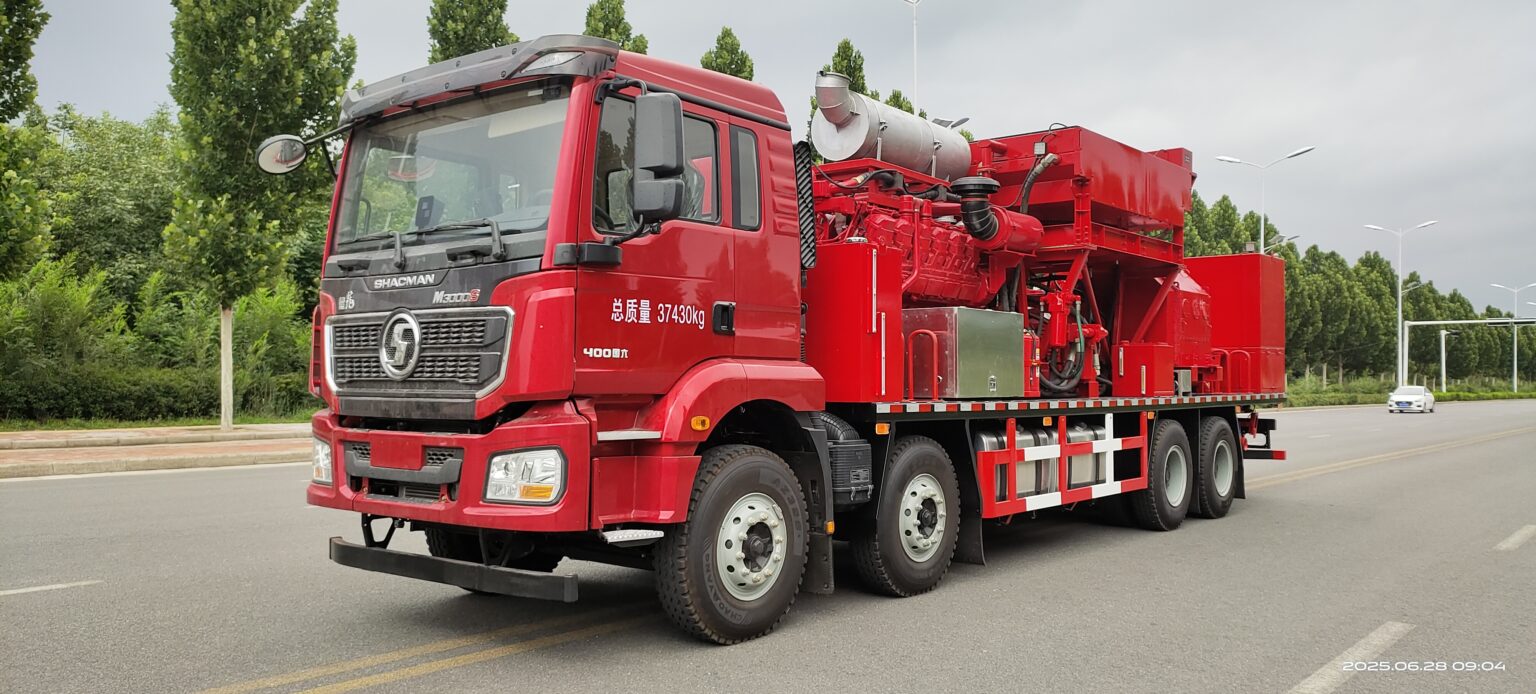
This guide focuses on the carrier decision for international buyers. Start with the required pumping duty and the truck-mounted fracturing equipment configuration, then ask whether a different carrier offers a practical advantage. Trailer availability and engineering scope must be confirmed for the specific quotation; the photographs here show truck-mounted equipment, not a trailer offered as standard.
Frac pump trailer versus truck: compare the complete moving unit
A trailer-mounted package requires a compatible tractor and a transport plan that accounts for the combined vehicle. A truck-mounted package integrates the pumping equipment with its chassis, but the chassis remains part of the maintenance and availability calculation. In both cases, include fuel, fluids, tools, spare parts and any equipment carried during relocation. An empty shipping weight is not an adequate substitute for an operating or road-travel weight.
| Decision | Trailer-mounted package | Truck-mounted package |
|---|---|---|
| Fleet resources | Confirm tractor compatibility and dispatch availability. | Assess the dedicated chassis and local service support. |
| Site access | Review combined length, turning space and trailer clearance. | Review wheelbase, axle loading and access geometry. |
| Maintenance planning | Determine when the tractor can be reassigned safely. | Account for chassis downtime affecting the complete unit. |
| Deployment scope | List tractor, connections, supports and auxiliary transport separately. | List chassis-mounted scope and equipment transported separately. |
Request a weight breakdown, not one headline figure
Buyers searching for frac pump trailer weight often receive a single approximate number. Request a general arrangement drawing with dimensions, center-of-gravity information and load distribution for the proposed transport condition. Identify what has been drained, removed or shipped separately. For a trailer, include the proposed tractor combination; for a truck, include chassis and axle data for the quoted build.
Send the intended port, route restrictions and site access information to the supplier and your transport specialist before approving the layout. Local registration and transport acceptance depend on the destination and configuration. A supplier's domestic chassis approval should not be treated as proof that the same complete vehicle can be registered in the buyer's country.
Keep pumping performance separate from carrier preference
Specify the required flow at each working pressure, the fluid properties, expected continuous operating periods and ambient conditions. A maximum pressure figure and a maximum flow figure may describe different operating points. Ask for the proposed operating envelope and the assumptions behind the available power at the pump, including drive losses and any applicable site derating.
The frac pump pressure, power and delivered-scope guide helps establish that common technical basis. Once it is fixed, compare carriers without allowing a larger advertised engine rating to hide a different pumping duty. Controls, suction conditions, cooling arrangements and service access remain important regardless of where the package is mounted.
Draw the pad layout before selecting the carrier
Give bidders a scaled pad sketch showing access roads, other pumping units, fluid supply, discharge connections and planned personnel routes. Request the working footprint as well as the parked footprint. A layout that fits inside a transport envelope may still need additional space for opening panels, lifting components and positioning service equipment.
Confirm connection locations and whether the proposed arrangement changes the length or handling of the site pipework. The site's responsible engineering team must approve pressure containment, isolation and operating arrangements. This comparison is a procurement tool, not a rig-up procedure or a substitute for the approved well program.
Compare downtime exposure and the export support package
Ask which pump and drivetrain service tasks can be completed in the field and which require a workshop. Identify the lifting equipment, removal clearances and special tools needed for major components. Where tractor sharing is part of the business case, document how another job will obtain a tractor when the pumping package must move unexpectedly.
A useful quotation also identifies chassis or tractor responsibilities, commissioning scope, maintenance documentation language and the initial spare-parts list. Compare freight assumptions and packing dimensions on the same basis. Do not calculate a lower total cost from the carrier price alone while excluding a tractor, mobilization equipment or destination modifications from one option.
What to send with a carrier-comparison enquiry
- Pumping pressure and flow points, fluid description and duty cycle.
- Country of use, road and access constraints, and a pad layout.
- Available tractors, workshop resources and preferred chassis support network.
- Expected relocation frequency and the equipment carried on each move.
- Requested weight conditions, drawings, documentation and acceptance evidence.
Send Vance your pumping duty and transport constraints to discuss a suitable configuration. Ask for each proposed carrier to be priced against the same technical scope, with exclusions clearly marked. The decision should follow an approved layout and a documented transport plan, not the assumption that either a trailer or a truck is universally superior.
Continue your equipment research
Compare the equipment pages and technical notes most closely connected to this topic.