
Nitrogen generation system cost should be compared at the same delivered gas purity, flow and pressure. A generator-only price is not equivalent to a truck carrying air treatment, a compressor, a nitrogen booster, controls and its own power source. Before comparing purchase prices, write down where each supplier’s responsibility ends.
For a mobile nitrogen generation truck, the commercial decision combines equipment scope, annual utilization, site conditions and the reliability of alternative gas supply. On-site generation is not automatically the lowest-cost option for short or infrequent campaigns.
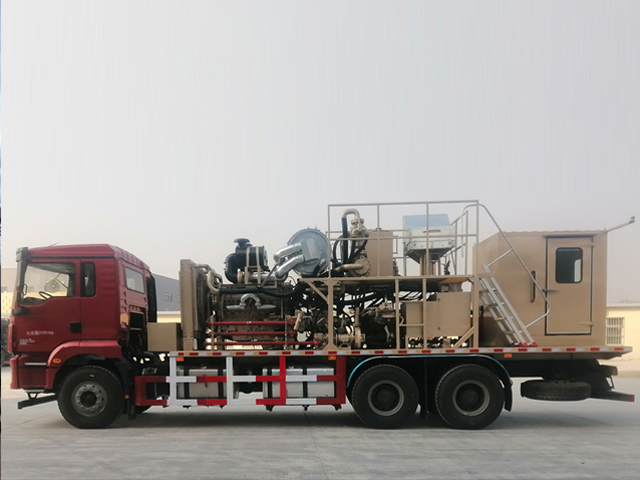
First normalize the gas specification
State the required nitrogen purity or allowable residual oxygen, delivered flow, discharge pressure and continuous running time together. Define the reference temperature and pressure for quoted gas volume. Confirm whether the quoted flow is net usable output after ancillary consumption and whether output is maintained at the specified ambient temperature and altitude.
Higher purity can change the available output and compressed-air demand. A lower purchase price for a different purity or pressure is not a like-for-like saving. Ask bidders to identify derating and the equipment arrangement needed at each important duty point. The PSA versus membrane comparison explains the technology-selection questions separately from the cost calculation.
Build one inclusion schedule for all quotations
| Cost boundary | Items to identify | Comparison risk |
|---|---|---|
| Air supply | Compressor, cooling, drying, filtration and power | A generator price may assume buyer-supplied treated air |
| Nitrogen delivery | Separation module, booster, buffer and instruments | Generator outlet pressure may not meet the job requirement |
| Mobile integration | Chassis, enclosure, transport mass and climate package | Stationary and vehicle-mounted prices cover different work |
| Handover | Tests, manuals, training and commissioning | Travel and field support may be optional |
| Ongoing support | Filters, service labor, major overhaul and spares | Low initial cost can hide a costly service boundary |
Calculate cost per usable unit, not rated output
A practical annual model is: annualized ownership cost plus operating energy, maintenance, consumables, staffing, mobilization and backup supply, divided by the usable nitrogen volume delivered during the year. Use one consistent currency and gas-volume reference basis. Include idle periods and startup or off-spec gas where relevant instead of multiplying nameplate capacity by every calendar hour.
Illustrative utilization example, not a Vance performance claim: assume a project requires 500 Nm³/h of usable gas. At 1,000 productive hours the annual useful volume is 500,000 Nm³; at 2,000 hours it is 1,000,000 Nm³. If annual fixed ownership cost were unchanged, its contribution per Nm³ would halve in the second case. Fuel, wear, service intervals and staffing do not necessarily remain unchanged, so total unit cost will not simply halve.
Obtain energy consumption at the proposed purity, pressure and site condition. If the package uses separate air and booster drives, include both. Define the economic evaluation period and residual-value assumption, and have your finance team choose the annualization method. No generic market price can replace a scope-matched quotation.
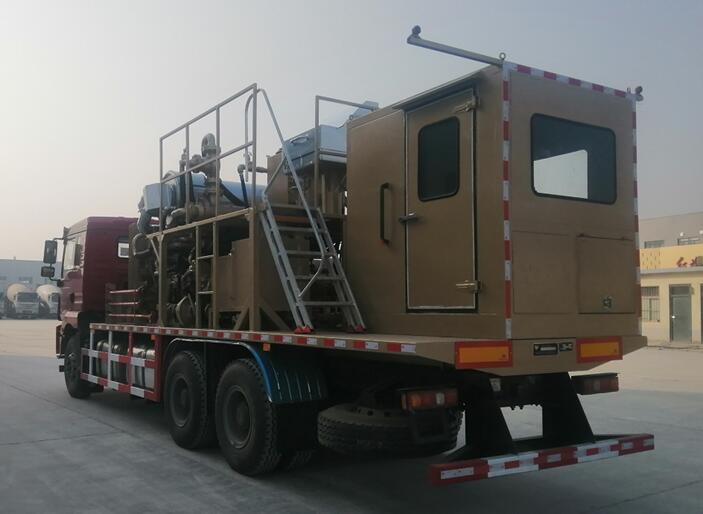
Compare delivered nitrogen on the same boundary
For delivered gas, request the usable quantity, transport charge, storage or vessel rental, minimum order, handling equipment and any vaporization or boosting scope. Include the expected number of mobilizations and the consequences of schedule changes. Do not compare delivered liquid volume directly with generator gas volume without a documented conversion basis.
For on-site equipment, identify planned maintenance windows, spare capacity and the backup arrangement if the unit is unavailable. Price backup explicitly rather than presenting avoided waiting time as a guaranteed saving. For a short campaign near a reliable gas supplier, delivered supply may be operationally simpler; repeated remote duty can justify a different evaluation.
What to send for a useful budget quotation
Provide the paired gas specification, annual productive hours, campaign length, site climate and altitude, available utilities, destination and preferred mobile arrangement. Ask for a scope list, exclusions, operating consumption basis and service schedule alongside the purchase price.
Request a nitrogen package proposal with those inputs. Treat the first budget as conditional until the duty, interfaces and supply boundary have been agreed; this makes later price revisions traceable rather than surprising.
Continue your equipment research
Compare the equipment pages and technical notes most closely connected to this topic.
- Nitrogen Generation Truck specifications and applications
- Fracturing Truck | Oilfield Fracturing Unit specifications and applications
- Nitrogen Generation Truck for Modern Oilfield Operations | On-Site Nitrogen Unit Buying Guide
- Nitrogen Generation Truck for Pipeline Purging and Well Intervention | On-Site N2 Supply Guide