
Sand cleanout sounds simple until the well is losing production, the pump is wearing faster than expected, and the crew is trying to decide whether the restriction is sand, scale, wax, or a mixture of all three. In many oil wells, sand does not create one dramatic failure. It creates a chain of smaller problems: reduced flow area, stuck equipment, abrasive wear, unstable production, and repeated service visits.
An oilfield flushing truck can support cleanout work when the job calls for mobile pumping, circulation, hot fluid, or coordinated field service. The goal is not simply to move fluid through the well. The goal is to restore a usable flow path while controlling risk to tubing, pumps, valves, and surface equipment.
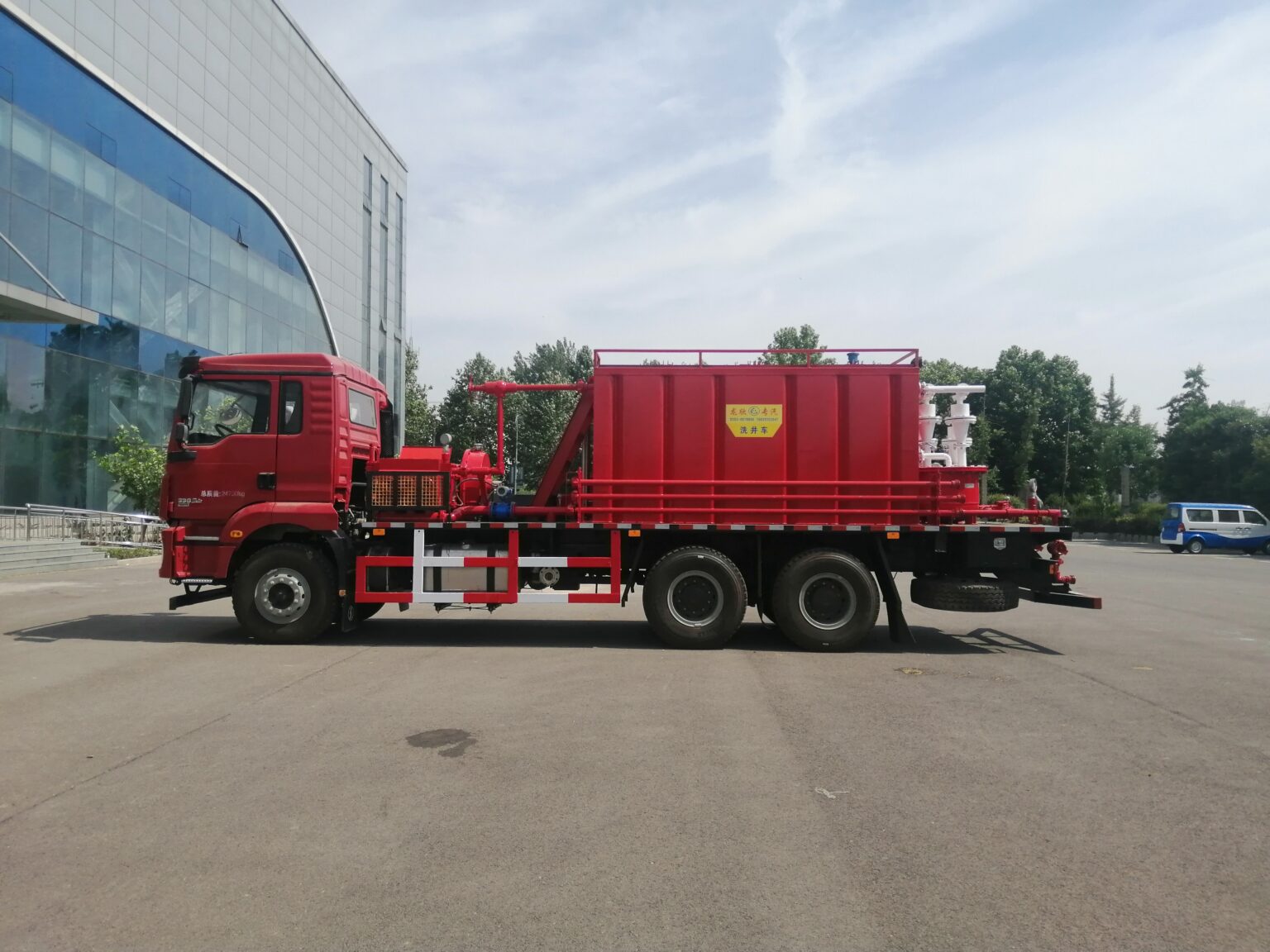
How Sand Problems Usually Show Up
Sand problems often appear as production decline, frequent pump maintenance, abnormal pressure response, solids in returned fluid, or difficulty during well intervention. The first step is to understand the symptom pattern. If the crew treats every production decline as a cleanout job, it may miss wax, paraffin, water-handling, or artificial-lift problems. If the crew waits too long, the sand bed can become harder to remove and the service cost can rise.
Field Decision Matrix
| Field Sign | Possible Meaning | Cleanout Planning Point |
|---|---|---|
| Gradual production loss | Partial restriction from sand or deposits. | Review pressure trend and returned solids before selecting flow rate. |
| Abrasive pump wear | Sand moving through production equipment. | Plan cleaning and downstream solids control together. |
| Unstable pressure during circulation | Changing restriction or bridging. | Operate cautiously and monitor response continuously. |
| Wax plus sand in returned fluid | Mixed deposit problem. | Consider hot-fluid support and chemical compatibility. |
A Practical Sand Cleanout Workflow
- Confirm the objective. Decide whether the job is restoring flow, preparing for testing, protecting the pump, or supporting a later intervention.
- Review well history. Look at production decline, sand reports, prior cleanouts, wax events, and equipment failures.
- Select fluid and pumping plan. Match fluid, temperature, rate, and pressure limits to the well condition.
- Rig up with clear return handling. Returned fluid and solids must have a safe route at the surface.
- Monitor pressure and returns. Do not judge success only by pumped volume; watch the well response.
- Evaluate after the job. Compare production, pressure, and solids behavior before and after service.
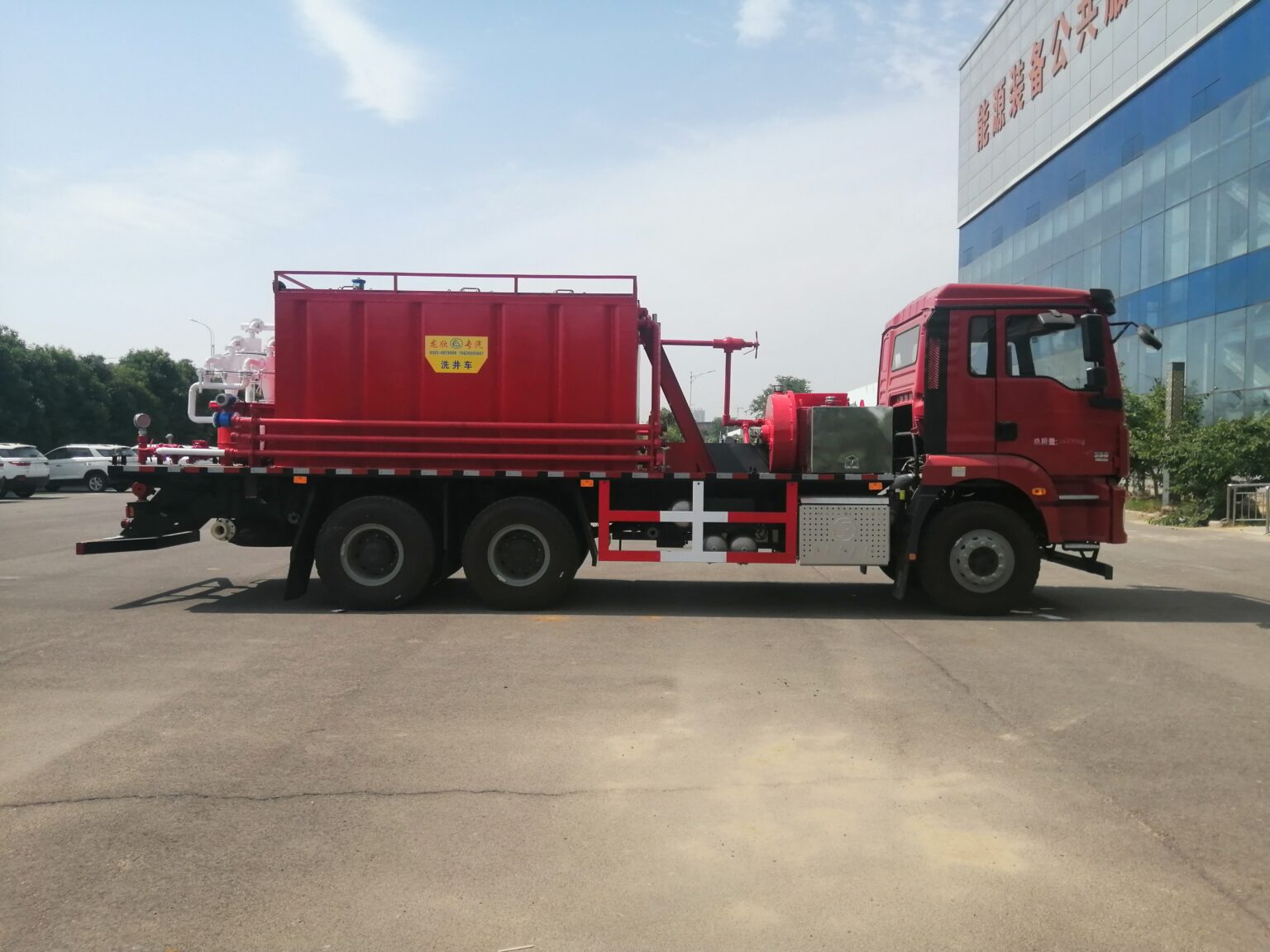
When Hot Fluid or Wax Removal Matters
Sand does not always travel alone. In heavy-oil or wax-prone wells, sand can mix with paraffin and make the restriction harder to move. In those cases, the operator may need to compare a flushing unit with a well flushing and wax removal truck. Hot fluid can help with wax-related restrictions, but the crew still needs to manage solids and avoid pushing the problem into another part of the system.
For pressure and circulation support, a triplex plunger pump may also be relevant, depending on the required flow and pressure. The pump should be selected around the job envelope, not simply because a higher rating looks safer on paper.
What Makes a Flushing Truck Useful for Cleanout Work?
- Stable pumping performance within the well’s safe pressure range.
- Practical hose, valve, and manifold layout for fast rig-up and inspection.
- Heating or fluid-handling options when deposits are mixed with wax or heavy oil.
- Easy access to service points, because field cleanout work is hard on pumps and lines.
- A configuration that matches local road conditions and available crew skill.
After-Service Evaluation
A cleanout job should end with evidence, not just the feeling that the well is cleaner. Compare pre-job and post-job production, observe returned solids, check whether pump behavior improves, and record any abnormal pressure response. If the well quickly returns to the same restriction pattern, the operator may need sand-control changes, production adjustment, or a more complete service plan.
Vance Petro’s article on how hot oil flushing trucks improve paraffin removal efficiency is useful when wax is part of the problem. For pure sand cleanout planning, the most important thing is to avoid treating the truck as a generic pump. The right unit supports a controlled workflow from diagnosis to post-job review.
Continue your equipment research
Compare the equipment pages and technical notes most closely connected to this topic.
- Oilfield Flushing Truck | Sand Flushing Unit specifications and applications
- Well Flushing & Wax Removal Truck | Hot Oil Flushing Unit specifications and applications
- Hot Oil Flushing Unit Maintenance Checklist for Wax-Prone Oil Wells
- Hot Oil Flushing Procedure for Paraffin Removal | Hot Oil Flushing Unit Workflow Guide