
An oilfield cementing truck is one of the most important units in drilling and well completion. Cementing is not just a routine step after running casing. It supports wellbore integrity, zonal isolation, casing stability, and long-term production safety. Poor cementing can lead to gas migration, channeling, crossflow between formations, casing damage, remedial cementing, and costly delays. A reliable cementing truck helps the service crew mix, pump, monitor, and place cement slurry according to the well program.
Henan Vance Petroleum Machinery Co., Ltd. is an oilfield equipment manufacturer based in Puyang, Henan, close to China’s Zhongyuan Oilfield. The company focuses on practical equipment for well servicing, production support, heating, pressure pumping, nitrogen generation, cementing, fracturing, sewage treatment, and related oil and gas operations. For international buyers, Vance Petro can support product configuration, export documentation, spare parts planning, and technical communication before production.
Why Cementing Quality Matters
The main purpose of primary cementing is to fill the annular space between casing and formation with cement slurry and allow it to set into a strong sheath. This sheath supports casing, isolates zones, prevents unwanted fluid movement, protects casing from corrosive formation fluids, and creates a foundation for safe well completion. If the cement sheath is incomplete or poorly bonded, the well may experience problems throughout its life.
Wellbore integrity is especially important in high pressure, gas-bearing, deep, or complex formations. A small cementing problem can become a serious production or safety issue later. For this reason, cementing operations require accurate slurry mixing, controlled pumping, reliable pressure management, proper displacement, and good communication between drilling, cementing, and well engineering teams.
What a Cementing Truck Must Do
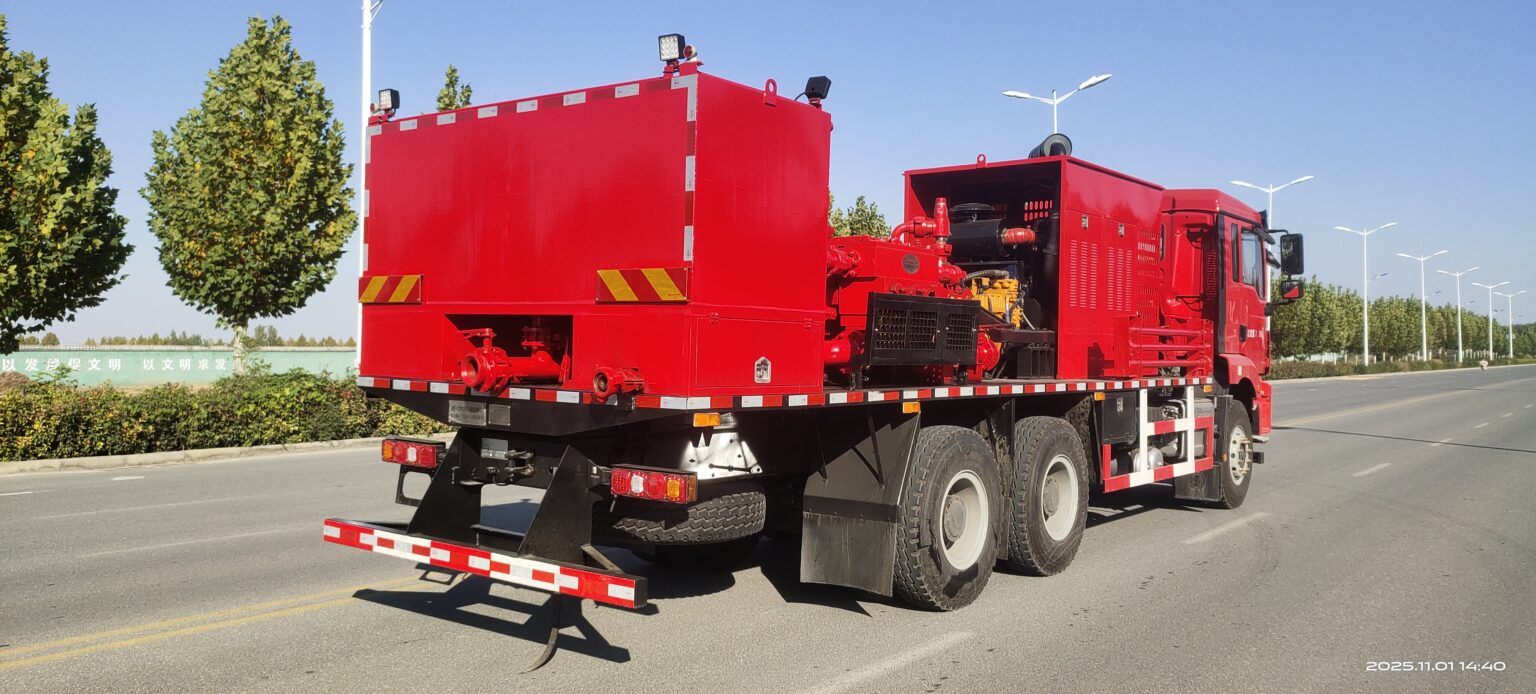
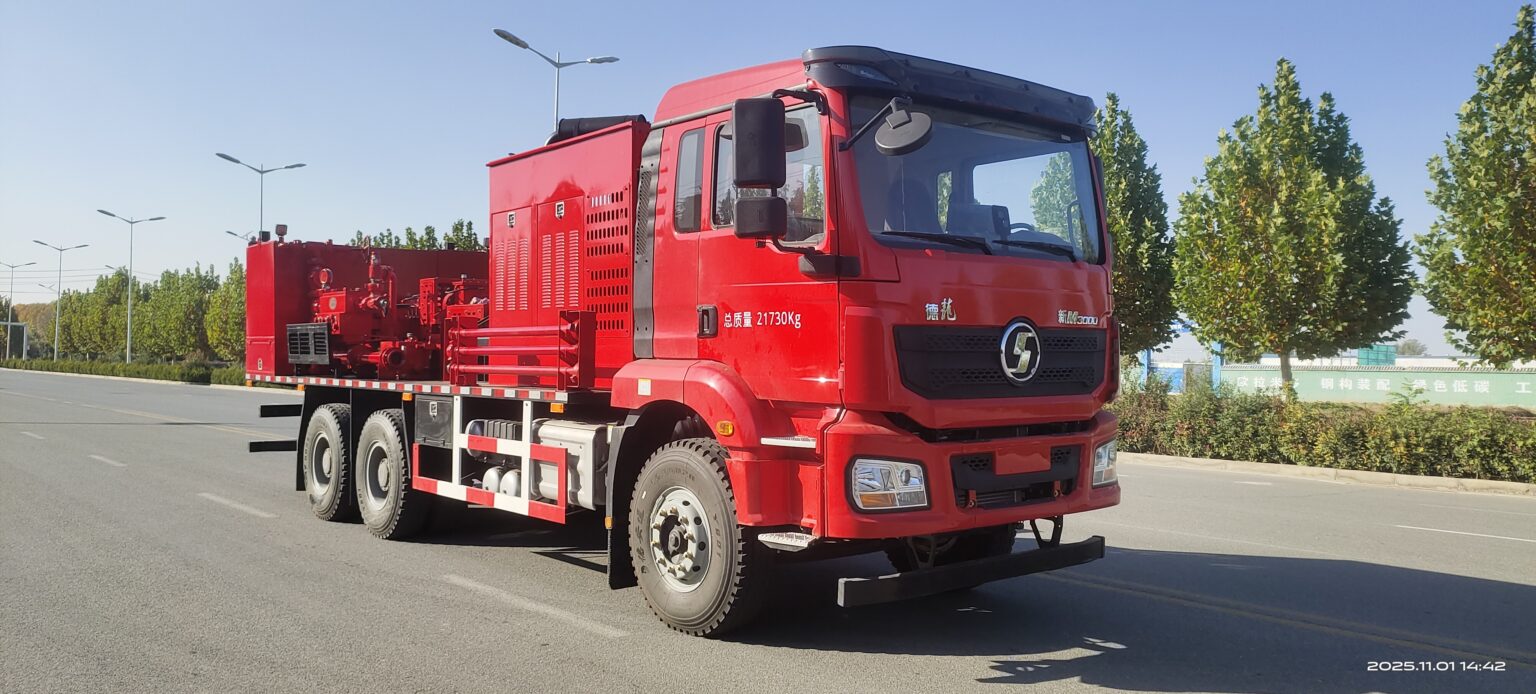
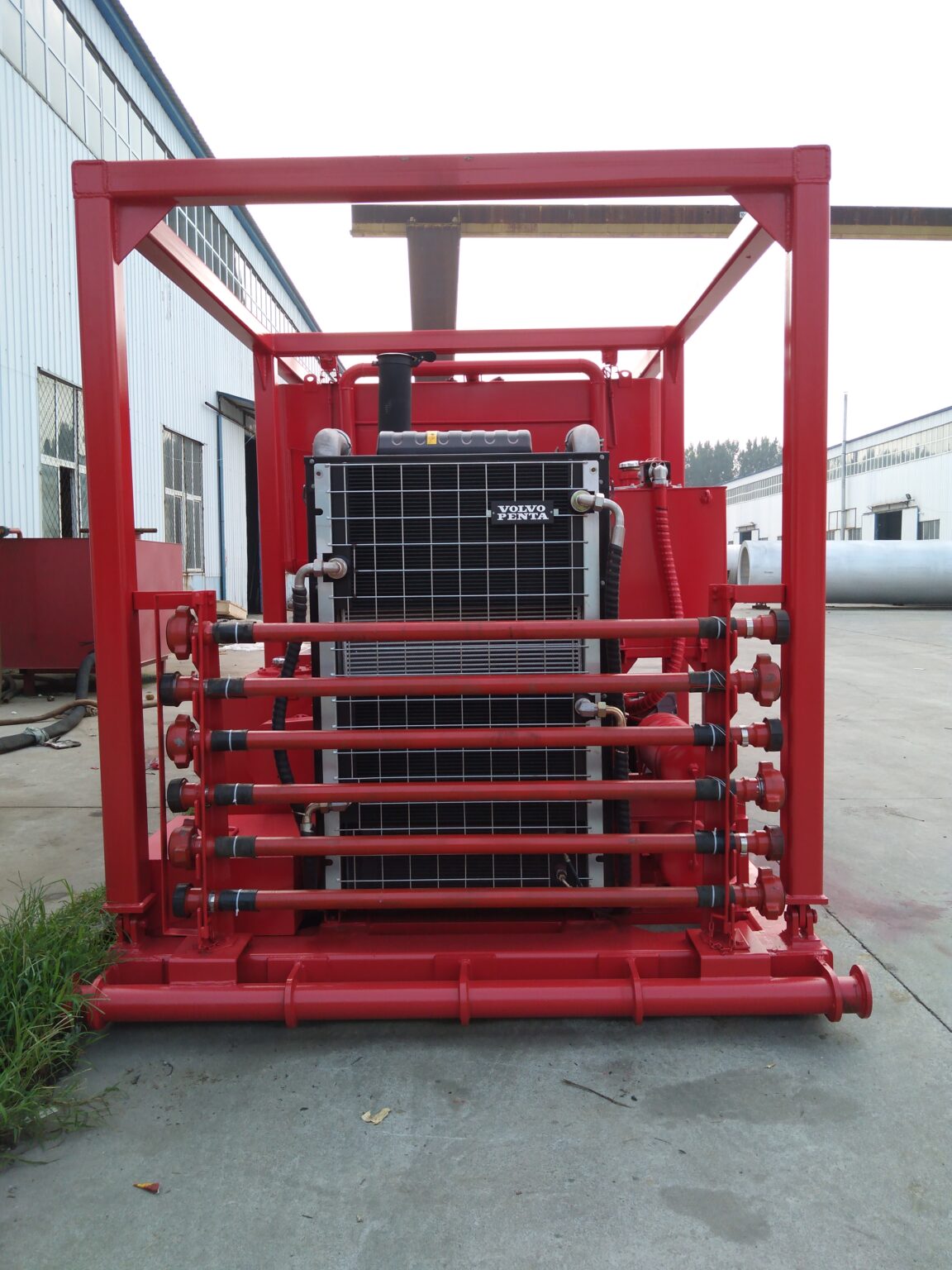
A cementing truck must mix and pump cement slurry under demanding field conditions. It generally includes high pressure pumps, mixing equipment, tanks or hoppers, manifolds, piping, control instruments, pressure gauges, flow monitoring, safety valves, and power systems. The unit must handle the required pressure and flow rate while maintaining stable operation through the job.
The pumping system is one of the most important parts of the truck. A stable pump helps maintain the planned flow rate and pressure. In many oilfield applications, triplex plunger pumps are used because they provide strong pressure capability and reliable flow for demanding jobs. Buyers interested in pumping performance can also review Vance Petro’s Triplex Plunger Pump page to understand related pressure pumping technology.
Key Cementing Truck Selection Factors
Pump Capacity and Pressure Rating
The selected cementing truck must match the expected well depth, casing size, slurry volume, displacement requirements, and pressure conditions. A pump that is too small may not complete the job efficiently, while an oversized unit may increase cost and transport complexity. The buyer should provide operating pressure, flow rate, slurry density, and job type when discussing the configuration with the manufacturer.
Mixing Accuracy
Good cementing depends on consistent slurry properties. The mixing system should handle cement, additives, water, and other materials according to the cementing design. Inconsistent mixing can change slurry density, thickening time, fluid loss, and final compressive strength. A reliable mixing system helps the crew execute the program more confidently.
Mobility and Chassis Design
Oilfield cementing units often move between well sites. The truck chassis should be suitable for local roads, climate, transport rules, and terrain. Weight distribution, access platforms, equipment protection, lifting points, and maintenance access should be considered during design. For export projects, the chassis and vehicle dimensions must also fit the destination country’s regulations.
How Cementing Connects With Other Oilfield Operations
Cementing is part of a broader well construction and completion process. After drilling, casing is run and cemented. Later, the well may require perforating, testing, stimulation, production equipment, or remedial work. If cementing quality is poor, these later operations may become more difficult. If cementing is performed properly, the well has a better foundation for long-term production.
For buyers comparing related equipment, the Cementing Truck product page is the main reference. Projects involving stimulation may also require a Fracturing Truck, while production evaluation may involve a Test Well Truck. Vance Petro has also published an article on the critical role of cementing trucks in ensuring wellbore integrity.
International Purchasing Considerations
International buyers should discuss both technical and commercial requirements before production. Technical requirements include pressure rating, pump model, flow rate, mixing capacity, tank arrangement, power system, control system, climate adaptation, safety devices, and spare parts. Commercial requirements include delivery time, export packaging, shipping dimensions, documentation, customs requirements, inspection, and after-sales service.
The destination market matters. A cementing truck for a hot desert environment may need stronger cooling, dust protection, and durable sealing. A truck for a cold region may need winterization and heating arrangements. A truck for remote fields may need a larger spare parts package and simpler maintenance access. These details should be clarified early because they affect design, cost, and long-term reliability.
Maintenance and Spare Parts
Cementing trucks work under pressure and often operate in difficult conditions. Routine maintenance is essential. Pumps, valves, seals, manifolds, hoses, gauges, control components, and mixing parts should be inspected according to the maintenance schedule. Spare parts should be selected according to expected job frequency and the buyer’s access to local supply. A recommended spare parts package can reduce downtime after the truck arrives in the destination country.
Why Choose Vance Petro for Cementing Equipment
Vance Petro manufactures and supplies a range of oilfield equipment, including cementing trucks, fracturing trucks, boiler trucks, hot oil flushing units, nitrogen generation trucks, triplex plunger pumps, oilfield burners, transmission boxes, production trucks, and sewage treatment equipment. This product background helps international buyers build a more complete equipment package when one project requires several types of oilfield machinery.
Conclusion
An oilfield cementing truck is a core part of well construction and completion. Its performance affects wellbore integrity, zonal isolation, safety, and long-term production. Buyers should evaluate pump capacity, mixing accuracy, mobility, control system, safety design, maintenance access, and spare parts support before ordering. Vance Petro can provide cementing truck solutions for international oilfield service companies, drilling contractors, and operators that need reliable equipment for demanding well completion projects.
Continue your equipment research
Compare the equipment pages and technical notes most closely connected to this topic.
- Cementing Truck | Oilfield Cementing Unit specifications and applications
- Triplex Plunger Pump specifications and applications
- The Critical Role of Cementing Trucks in Ensuring Wellbore Integrity and Successful Well Completion in Modern Oilfield Operations
- Cementing Unit Factory Acceptance Test: A Buyer’s Inspection Checklist