
When assessing oilfield equipment suppliers, verify the capability behind the specific package you intend to buy. A business registration, certificate or impressive vehicle photograph can support an initial review, but none independently proves that the supplier can engineer, assemble, inspect and support your required equipment. Connect the evidence to the contracting company, manufacturing location and agreed scope.
This is a practical qualification guide for overseas buyers of special vehicles and petroleum equipment. It is not a supplier ranking. Begin by matching your requirement to the supplier's oilfield equipment portfolio, then decide which capabilities need direct evidence before the order proceeds.
Identify who is responsible for each part of the package
Clarify which company signs the contract, which location performs final assembly and which organizations supply the major components. An integrator may legitimately use a purchased chassis, engine, pump or control system. The useful question is whether those responsibilities are transparent and whether the delivered package has a coherent technical owner.
Ask the supplier to distinguish in-house work, subcontracted fabrication, purchased components and services provided by another party. Record who approves drawings, manages changes, performs inspections and resolves problems at the interfaces. This is more informative than asking only whether the company is a “factory” or a “trading company.”
Match every capability claim to a piece of evidence
| Claim to review | Evidence to request | What the evidence should identify |
|---|---|---|
| Package engineering | Representative drawings and a project document schedule | Relevant equipment type, revision control and design responsibility |
| Assembly capability | Workshop review and examples of comparable work | Actual processes, production location and integration scope |
| Inspection capability | Inspection plan and representative records | Checks performed, instruments used and acceptance basis |
| Component traceability | Component list and identification records | Model, serial reference and document linkage where applicable |
| After-sales support | Parts proposal, manuals and support procedure | Contact route, responsibilities and equipment-specific information |
Request redacted examples when customer confidentiality prevents disclosure of full project files. A supplier can often explain the structure of its documentation without sharing another customer's private information. Do not mistake an unrelated sample document for proof of the exact performance offered in your quotation.
Make a workshop visit or video review specific
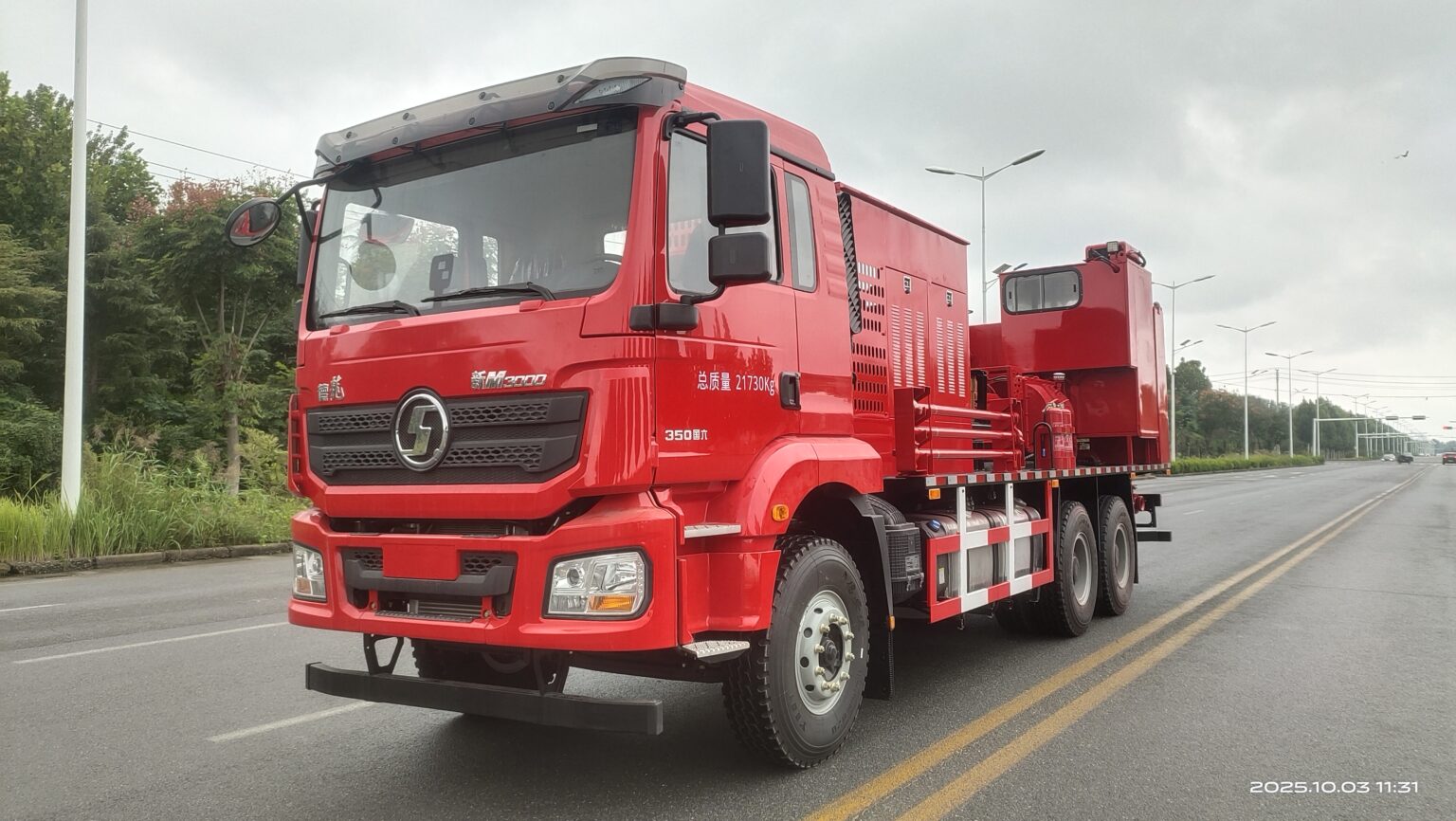
Prepare a short agenda around the equipment you are buying. For a cementing truck, useful discussion points include mechanical integration, piping layout, control assembly, access for maintenance and the planned test arrangements. A tour devoted entirely to unrelated vehicles tells you less about that purchase.
During a remote review, ask the supplier to explain the current work and show the connection between the drawing, component and assembly. Note which machines are completed, under assembly or simply displayed. Record the date and agreed findings so that the qualification file reflects what was actually reviewed.
If no comparable unit is currently in production, request another relevant form of evidence or agree a later inspection point. Absence of a demonstration that day is not, by itself, proof of missing capability. It does mean the buyer should avoid treating that item as already verified.
Read certificates within their stated scope
Check the company name, address, issuing organization, scope and validity shown on each document. Confirm authenticity through the issuer where available. A management-system certificate does not establish the pressure rating, destination approval or measured performance of an individual truck.
The company documentation archive provides an initial reference for supplier review. Ask for the current records relevant to your order and specify separately any equipment-level documents required by the project. Requirements vary with equipment, service and destination; they should be agreed rather than assumed from a generic certificate logo.
Use the quotation to test technical communication
Send a structured request with the application, operating envelope, destination and delivery boundary. Assess whether the reply identifies assumptions, asks useful questions and explains deviations. A rapid price with no equipment scope may be less usable than a proposal that clearly identifies unresolved technical inputs.
Ask for a revision-controlled technical offer, major-component list, preliminary arrangement and document schedule. Separate standard scope from options and buyer responsibilities. Where the offer proposes an alternative component, request the reason and how its performance and support will be evaluated.
Before production, agree approval points and a change process. The supplier should know which substitutions require buyer review. The buyer should also provide decisions on time so that drawings and procurement do not proceed against conflicting assumptions.
Verify the support route before shipment
Discuss manuals, spare-parts identification, commissioning scope and remote troubleshooting arrangements. Establish who handles the chassis, process package and purchased components. Avoid an arrangement in which every organization assumes that another party will respond when an interface issue appears.
Keep qualification conclusions factual: verified, supported by documents, pending review or outside scope. This makes unresolved items visible without presenting a supplier as universally approved for every oilfield product.
To begin a focused review, send Vance Petroleum your equipment requirement and supplier-qualification checklist. Include the evidence your procurement team needs and the proposed review schedule. The resulting exchange should establish what can be demonstrated, what is project-specific and what must be resolved before an order is released.
Continue your equipment research
Compare the equipment pages and technical notes most closely connected to this topic.
- Cementing Truck | Oilfield Cementing Unit specifications and applications
- Triplex Plunger Pump specifications and applications
- Produced Water Treatment Equipment: Defining Performance Guarantees Before Purchase
- Well Servicing Truck Selection for Oilfield Maintenance | How to Build a Practical Service Fleet